

Carvery Near Me: How to Find One and What It Costs
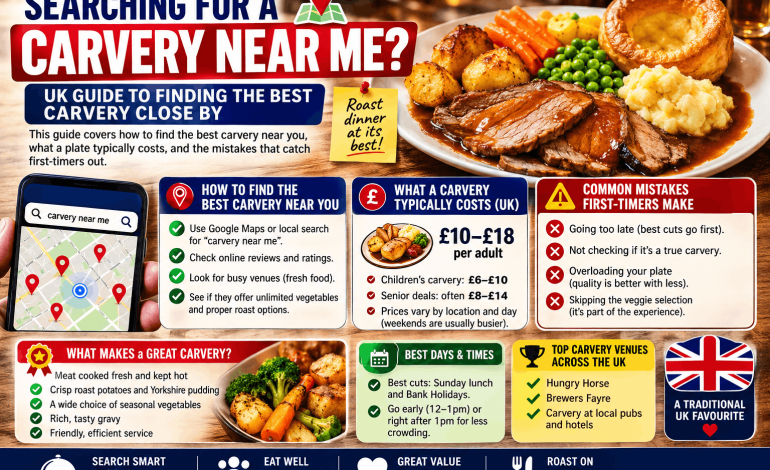

Typing “carvery near me” into Google usually means one thing: you want a roast dinner, you want it today or this weekend, and you want to know where to go without wading through a list of unrelated results. This guide gets you there. It covers how to actually find a decent carvery close to you, what you’ll pay, how the self-serve system works if you’ve never done it before, and the mistakes that trip up first-timers.
You’ll also find a comparison of the main UK chains, notes on booking and busy times, and answers to the questions people search for most alongside “carvery near me.”
How to Actually Find a Carvery Near You
Google Maps is the fastest route. Search “carvery” directly in Maps rather than the main search bar, and it will pull in pubs and restaurants within a few miles, ranked by distance and rating. Filter by “Open now” if you’re heading out shortly, since carveries usually only run at set times rather than all day.
The big chains also run their own postcode finders, which are more reliable for opening times and menu accuracy than a general search:
- Toby Carvery has a “find your local” tool on its website where you enter a postcode and it lists the nearest branches with booking links.
- Beefeater and Brewers Fayre, both part of the Whitbread group, share a combined restaurant locator.
- Harvester has its own locator and tends to run carvery-style roasts alongside its salad bar rather than a full carving station at every branch, so check the specific restaurant’s menu first.
[Image: photo of a traditional carvery serving counter with roast meats, use royalty-free image from Unsplash or Pexels]
Independent pubs are the wildcard. Many still run a proper Sunday carvery even without national branding, and they’re often better value and better quality than the chains. A search for “carvery” plus your town name on TripAdvisor will surface these alongside reviews, which the chain locators won’t show you.
What a Carvery Actually Is (and How the Serving Works)
A carvery is a self-serve roast dinner where meat is carved to order at a counter, and you build your own plate from a range of sides. Some carveries let you go back for more; that’s the model most people mean when they search for one, though it’s worth confirming with the venue.
The general process at most UK carveries runs like this:
- Book or queue. Weekends need a booking. Weekdays you can often walk in.
- Pay first (usually). Most chains take payment at the till or table before you go to the carving deck.
- Collect your plate and queue at the deck. A member of staff carves your chosen meats to order.
- Add your own sides. Roast potatoes, Yorkshire puddings, vegetables, stuffing and gravy are typically self-service.
- Eat, then decide on seconds. At venues offering it, you can return to the deck as many times as you like within the sitting.
A bit of etiquette makes the queue move faster: take a smaller first portion rather than piling your plate to the edges, ask staff if you’re unsure which gravy or sauce is vegetarian, and don’t crowd the person doing the carving. If you’re eating with a large group, expect a longer wait at peak times, particularly between 12pm and 2pm on Sundays.
[Table: comparison of the carvery process across Toby Carvery, Brewers Fayre and an independent pub, showing booking requirement, payment timing, and whether seconds are included]
Carvery Near Me: Prices and What’s Included
This is the part most searchers actually want to know, and it’s also the part that varies the most by location, day of the week and time. Menu prices differ between branches of the same chain, so treat the figures below as a general guide and check the specific restaurant’s own page or app before you go.
At Toby Carvery, weekday carvery meals commonly sit in the £11 to £13 range, with a meat-free carvery usually priced a couple of pounds lower than the meat option. Weekend and evening carveries tend to cost more, and premium meats such as lamb are sometimes only available on Sundays. Kids’ meals typically start under £6.
Brewers Fayre carveries have been advertised at £9.99 for adults and £4.49 for children, with the price applying to a set carvery sitting rather than the full day.
Harvester’s roast and carvery-style dishes are usually priced per main course rather than as a fixed all-in fee, but include unlimited access to the salad bar as part of the price.
| Chain | Typical adult price | Kids’ price | Notes |
| Toby Carvery | Roughly £11–£15, weekday deals often lower | From around £5 | Meat-free option usually £2–£3 less |
| Brewers Fayre | From around £10 for a set carvery sitting | From around £4.50 | Price and availability vary by branch |
| Harvester | Priced per main, unlimited salad bar included | From around £5 | Not every branch runs a full carving deck |
| Independent pub carvery | Widely variable, often £9–£16 | Often has a children’s price | Check reviews and the pub’s own site or Facebook page |
Prices at all of these venues move with promotions, seasonal specials and inflation, so check the official website or app for the current price at your chosen branch before you travel. Loyalty schemes are worth signing up to if you’ll return: Toby Carvery’s free Carvery Club has offered a welcome discount on your first bill, and Blue Light Card holders have been able to get money off food at Toby Carvery on weekdays.
Weekday Carvery vs Sunday Carvery: What Changes
The day you go changes more than just the price. On weekdays, carveries typically run a shorter serving window, often lunchtime only, with a smaller range of meats and lower prices to bring in passing trade. Sunday carveries usually run all day, offer a wider choice, including lamb or turkey at some venues, and cost more because demand is highest.
If you’re flexible, a Tuesday or Wednesday lunchtime carvery is usually your cheapest and quietest option. If you specifically want the full Sunday roast experience with the widest meat selection, book ahead and expect to pay the premium rate.
Booking a Carvery: When You Need To and When You Don’t
Sunday lunchtimes at any chain carvery near a residential area will be busy, and many popular branches take bookings weeks in advance around bank holidays, Mother’s Day and Christmas. Book online through the chain’s website or app rather than by phone where possible, since online booking usually shows real-time table availability.
Weekday carveries are far more relaxed. Most chains don’t require a booking for a weekday lunch, though ringing ahead is still sensible if you’re bringing a group of six or more.
[Image: screenshot of a restaurant chain’s online booking page showing available time slots]
Mistakes to Avoid When Choosing a Carvery Near You
Trusting Google’s distance sort over its opening hours. The nearest result on a map isn’t useful if the carving deck stopped serving an hour ago. Always check the specific serving times for carvery, which are usually narrower than the restaurant’s general opening hours.
Assuming every “carvery” pub does unlimited seconds. Some venues charge per plate rather than offering a fixed-price sitting. Ask when you book or when you arrive, rather than assuming.
Turning up to a Sunday carvery without booking. This is the single most common regret people mention in reviews. A twenty-minute wait for a table is common at peak times without a reservation.
Overlooking the app-only discounts. Several chains reserve their best offers, including discounted kids’ meals and loyalty club welcome deals, for people using their app rather than walking in cold.
Not checking allergen information in advance. Carvery decks are self-service, which means shared serving spoons and a higher risk of cross-contamination between dishes. If you have a food allergy or coeliac disease, ask staff for the allergen menu before you start serving yourself, and consider asking for your meal to be plated in the kitchen instead. Toby Carvery, among others, provides allergen information on request and via its website, but the exact gluten-free items can vary between branches.
Vegetarian, Vegan and Dietary Options at a Carvery
Most major carvery chains now offer a meat-free carvery option alongside the traditional meat deck, usually built around a nut roast, plant-based “meat” or a larger vegetable and stuffing plate. These are typically priced a little lower than the meat carvery.
If you’re vegan, check in advance rather than assuming: gravy is a common sticking point, since some venues make separate meat and vegetable gravies while others use a single gravy that isn’t suitable. Cauliflower cheese and Yorkshire puddings usually contain dairy and egg, so ask before serving yourself if you’re avoiding either.
FAQ
Q: What is a carvery? A carvery is a restaurant or pub meal where meat is freshly carved to order at a serving counter, and diners help themselves to sides such as roast potatoes, vegetables, stuffing and gravy. Some carveries include unlimited returns to the deck within the price, while others charge per plate, so it’s worth checking before you order.
Q: How much does a carvery cost in the UK? Prices vary widely by chain, branch and day, but a typical adult carvery meal at a major chain has recently ranged from around £9 to £15. Weekday lunches tend to be cheaper than Sunday carveries, and children’s meals are usually priced separately and lower. Always check the specific restaurant’s current price before you go, since these change with promotions and inflation.
Q: Do I need to book a carvery? You don’t always need to, but it’s strongly recommended for Sunday lunchtimes, bank holidays and any group of more than four. Weekday carveries are usually fine to walk into, though phoning ahead for larger groups avoids disappointment.
Q: Can you go back for seconds at a carvery? At many chain carveries, yes, seconds are included in the price of your sitting. This isn’t universal though, some pubs charge per plate rather than per sitting, so ask staff when you arrive if it isn’t stated on the menu or booking confirmation.
Q: What’s included in a carvery meal? A standard carvery includes your choice of carved meats plus self-service sides such as roast potatoes, Yorkshire puddings, seasonal vegetables, stuffing and gravy. Drinks and desserts are almost always charged separately.
Q: Is there a vegetarian or vegan carvery option? Most major chains now offer a meat-free carvery, typically built around a nut roast or plant-based alternative, usually priced a little below the meat option. Vegan diners should still check gravy and side dishes individually, since dairy and egg can appear in items like cauliflower cheese and Yorkshire puddings.
Q: What time does carvery service usually run? This varies by venue, but many chains serve carvery from around midday until mid-afternoon on weekdays, and all day on Sundays until early evening. Always check the specific branch’s carvery hours rather than its general opening hours, since these are often shorter.
Q: Is a carvery good value for a family? It can be, particularly on weekdays when prices drop and children’s meals are discounted or included in a promotion. Compare the total cost for your group against a set menu elsewhere before booking, since large groups can sometimes get a better deal with a fixed-price family offer than paying full carvery price per head.