 Haris
Haris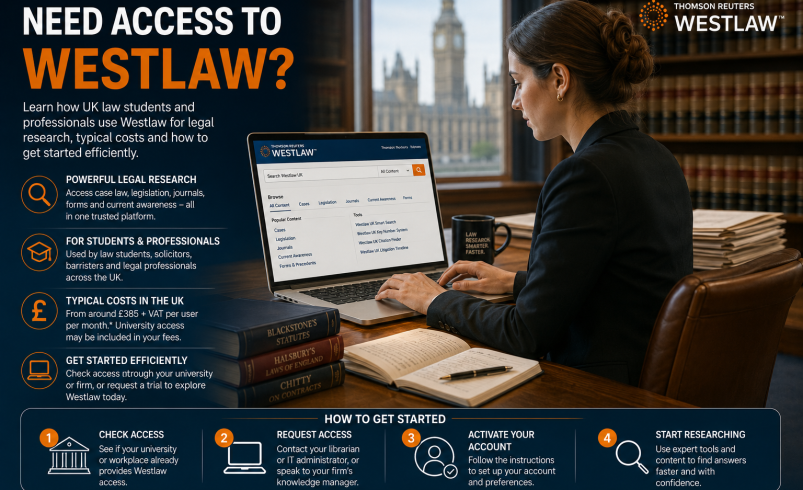
Are you trying to access Westlaw for legal research but unsure where to start or how much it costs? Westlaw is a premium online legal research service provided by Thomson Reuters, widely used by UK law students, solicitors and barristers to find case law, legislation and commentary. Most university law schools provide free access to their students, while private practitioners pay substantial subscription fees. This guide explains exactly what Westlaw offers, how to log in if you are a student, what alternatives exist for the general public and how to use its key features effectively. You will learn how to navigate the platform, understand its pricing structure for firms and discover tips for faster, more accurate legal searches. Whether you are writing an essay or preparing for court, knowing how to use this tool properly saves time and improves your work.
What Is Westlaw and Who Uses It?
Westlaw is a comprehensive database of primary and secondary legal materials. In the UK, it covers English and Welsh law, as well as Scottish and Northern Irish jurisdictions where applicable. It includes full-text judgments from higher courts, all current and historic legislation, statutory instruments and expert commentary from leading legal publishers like Sweet & Maxwell.
The primary users are law students and legal professionals. Universities subscribe to Westlaw so students can complete coursework and dissertations using authoritative sources. Law firms and chambers use it for client advice, litigation preparation and due diligence. The platform is valued for its accuracy, speed and advanced search capabilities that go far beyond simple keyword matching.
Unlike free resources, Westlaw content is curated and edited by legal experts. Cases are headnoted with summaries and key points, making them easier to digest. Legislation is annotated with changes over time, ensuring you see the law as it stands today. This reliability is why it remains the industry standard despite the cost.
How to Access Westlaw in the UK
Access methods depend on whether you are a student, a professional or a member of the public.
For University Students
If you are studying law at a UK university, you likely have free access. Your institution pays for a site licence. To log in, visit the Westlaw UK website and select “Institutional Login” or “Shibboleth”. You will be redirected to your university’s single sign-on page. Enter your student credentials there. Once logged in, you can access the full database from anywhere, not just on campus. Check your library’s website for specific login instructions or help guides.
For Legal Professionals
Law firms and barristers’ chambers purchase commercial subscriptions. These are expensive and tailored to the size of the practice. A solo practitioner might pay several thousand pounds per year, while large firms pay significantly more. Access is managed through firm-specific accounts. If you work in a legal role, ask your IT or knowledge management department for login details. Individual subscriptions are rare and costly, usually reserved for sole traders who do not have firm-wide access.
For the General Public
Westlaw does not offer affordable individual subscriptions for the general public. Prices are prohibitive for casual use. If you need to look up a specific case or law, consider free alternatives like BAILII (British and Irish Legal Information Institute) or legislation.gov.uk. Some public libraries offer limited access to legal databases, but Westlaw is rarely included. It is primarily a professional tool.
Features of Westlaw UK
Understanding the tools available helps you research more efficiently.
Case Law Search
You can search for cases by party name, citation, judge or keyword. The results include full texts of judgments from the Supreme Court, Court of Appeal, High Court and lower tribunals. Each case has a summary (headnote) highlighting the key legal principles. You can filter by date, court level and jurisdiction. The “KeyCite” feature shows if a case is still good law or if it has been overturned or distinguished by later judgments.
Legislation Database
Westlaw provides consolidated versions of Acts of Parliament and Statutory Instruments. This means you see the law as it is currently in force, incorporating all amendments. You can view historical versions to see what the law was at a specific past date. Annotations explain the effect of changes and link to relevant case law that interprets specific sections. This saves hours of manual cross-referencing.
Commentary and Journals
The platform includes thousands of articles from legal journals, practitioner books and encyclopedias like Halsbury’s Laws of England. This secondary material provides analysis and context that primary sources lack. It is invaluable for understanding complex areas of law or finding arguments for essays and submissions. You can search across all commentary or focus on specific titles.
Practical Law
Practical Law (formerly known as PLC) offers practical guidance, checklists and standard document clauses. It is designed for transactional lawyers who need to draft contracts or advise on corporate matters. While separate from the core case law database, it is often bundled in commercial subscriptions. It provides step-by-step guides on legal processes and regulatory compliance.
Typical Costs and Subscription Models
Pricing for Westlaw is not publicly listed and varies based on negotiation and usage. However, we can outline general structures.
Academic Licences
Universities pay annual fees based on student numbers and usage levels. This cost is absorbed into tuition and library budgets. For students, the marginal cost is zero. If you are a student, do not pay for access yourself unless your university explicitly does not provide it, which is rare for accredited law courses.
Commercial Licences
For firms, pricing is complex. It depends on:
- Number of users (seats)
- Modules required (e.g., just case law vs. full suite with Practical Law)
- Usage caps (some plans charge extra for excessive downloads)
A small firm might pay between £3,000 and £10,000 per year. Large international firms can pay six figures. There are often setup fees and training costs. Contracts are typically annual with auto-renewal clauses. Always negotiate before signing, as discounts are common for new clients or multi-year commitments.
Pay-As-You-Go Options
Thomson Reuters occasionally offers short-term access or document purchase options, but these are expensive per unit. Buying a single case report might cost £20 to £50. This is only viable for very occasional needs. For regular use, a subscription is always more economical.
How to Use Westlaw Effectively
Searching legal databases requires skill. Poor search terms yield poor results.
Using Advanced Search
Do not just type a question into the search bar. Use the Advanced Search form. You can specify fields like “Case Name”, “Judge”, “Date” or “Subject”. Use Boolean operators: AND to combine terms, OR to broaden, and NOT to exclude. For example, negligence AND “duty of care” NOT medical finds negligence cases about duty of care but excludes medical negligence.
Filtering Results
After searching, use filters on the left-hand side. Narrow by date range to find recent authorities. Filter by court level to focus on binding precedents (e.g., Supreme Court and Court of Appeal). Selecting “Full Text” ensures you see the whole judgment, not just the headnote.
Saving and Organising
Create folders to save cases and legislation. You can add notes and tags to items. This builds a personal library for your case or module. You can also set up alerts. If a new case is published that matches your search criteria, Westlaw emails you. This keeps you updated on developing areas of law without daily manual checks.
Checking Citations
Always verify if a case is still good law using KeyCite. A red flag indicates negative treatment (overruled). A yellow flag means caution (distinguished or limited). Green means positive treatment. Relying on an overruled case is a serious error in legal practice.
Mistakes to Avoid
Even experienced users make errors. Watch out for these pitfalls.
Ignoring Jurisdiction
Ensure you are searching the correct jurisdiction. Westlaw UK covers England and Wales primarily. If you need Scottish law, switch the jurisdiction filter. Mixing up jurisdictions can lead to citing irrelevant authority.
Over-Reliance on Headnotes
Headnotes are summaries written by editors, not judges. They are helpful but can miss nuances. Always read the full judgment, especially the reasoning part, to understand the context. The headnote might simplify a complex point incorrectly.
Not Updating Searches
Law changes constantly. A search done six months ago may miss crucial new developments. Re-run key searches before finalising any work. Use alerts to automate this process.
Poor Keyword Choice
Legal terminology is precise. Using layman’s terms may miss relevant cases. Use a legal dictionary or thesaurus within Westlaw to find synonyms. For example, use “tort” instead of “civil wrong”.
Alternatives to Westlaw
If you cannot access Westlaw, other resources exist.
Free Resources
- BAILII: Provides free access to many UK judgments and legislation. It is less user-friendly and lacks annotation but is comprehensive for primary sources.
- Legislation.gov.uk: The official source for UK legislation. It is authoritative and up-to-date but lacks the commentary and case links of Westlaw.
- GOV.UK: Good for government guidance and some tribunal decisions.
Paid Competitors
- LexisLibrary: The main competitor to Westlaw, also by LexisNexis. It offers similar features and coverage. Many firms subscribe to both.
- JustisOne: A newer competitor focusing on AI-driven search and visualisation. It is gaining popularity among some practitioners.
- Bloomsbury Professional: Offers strong commentary and precedents, particularly in commercial law.
Choose based on your specific needs and budget. For students, stick to what your university provides.
Frequently Asked Questions About Westlaw
Q: Is Westlaw free for students?
Yes, most UK university law students get free access through their institution’s subscription. Log in via your university’s portal or Shibboleth. If you are unsure, contact your university library.
Q: Can I buy a personal Westlaw subscription?
Individual subscriptions are available but very expensive, often costing thousands of pounds per year. They are designed for sole practitioners. For casual use, free alternatives like BAILII are better value.
Q: Does Westlaw cover Scottish law?
Yes, Westlaw UK includes Scottish case law and legislation. You must select the Scottish jurisdiction filter when searching to ensure relevant results. It also covers Northern Ireland.
Q: What is KeyCite?
KeyCite is a citation checking tool. It shows the history of a case and how it has been treated by later courts. Red flags indicate negative treatment, helping you avoid citing overruled law.
Q: How do I export cases from Westlaw?
You can download cases as PDFs or Word documents. Use the “Download” button on the case page. You can also email sections directly. Respect copyright limits on how much you can distribute.
Q: Is Westlaw better than LexisLibrary?
Both are excellent and similar in coverage. Preference often depends on user interface and specific module strengths. Many large firms subscribe to both. Try both if possible to see which suits your workflow.