 Haris
Haris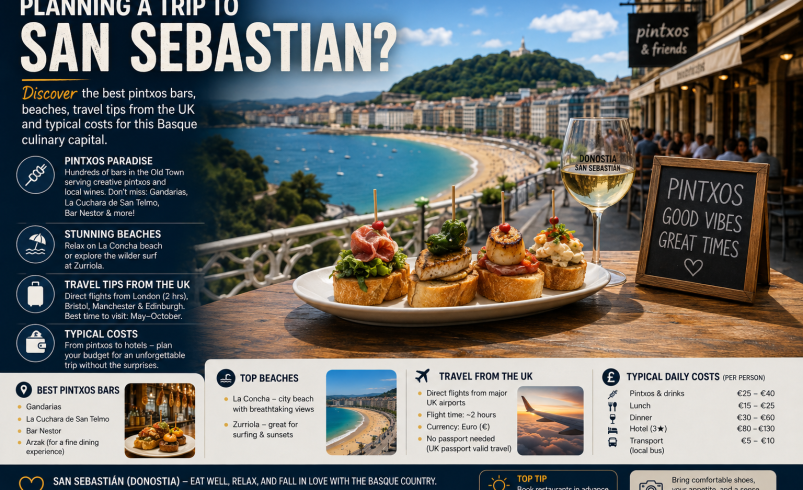
Are you planning a trip to San Sebastian and wondering where to start with such a famous food destination? This city in Spain’s Basque Country is renowned for having more Michelin stars per capita than almost anywhere else, yet it remains accessible for budget-conscious travellers thanks to its vibrant pintxos culture. You can reach it easily from the UK via flights to Bilbao or San Sebastian Airport, followed by a short transfer. This guide covers everything you need to know, from the best neighbourhoods to stay in and how to order like a local, to typical costs and common tourist mistakes. Whether you are a serious foodie or just looking for a beautiful beach break, you will learn how to make the most of your visit without overspending or missing out on the authentic experience.
Why San Sebastian Is a Top Destination for UK Travellers
San Sebastian, known locally as Donostia, offers a unique blend of French elegance and Spanish vibrancy. For UK visitors, it is an ideal short-haul destination that feels worlds away from home. The city is compact, walkable and safe, making it perfect for long weekends or week-long breaks.
The primary draw is the food. The Basque Country is a global culinary powerhouse. However, you do not need a huge budget to eat well. The tradition of pintxos (Basque tapas) allows you to sample high-quality ingredients in small, affordable portions. You can hop from bar to bar, enjoying a glass of txakoli (local white wine) and a bite of gourmet seafood for a fraction of the cost of a sit-down meal.
Beyond food, the city boasts stunning geography. La Concha beach is often cited as one of the most beautiful urban beaches in Europe. The surrounding hills provide easy hiking trails with panoramic views, and the nearby French border offers opportunities for day trips. The climate is mild, though rainy, so it appeals to those who prefer cooler summers over the intense heat of southern Spain.
How to Get to San Sebastian from the UK
Reaching San Sebastian is straightforward, with several transport options available.
Flights
The most common route is flying into Bilbao Airport (BIO). Major UK airlines like British Airways, EasyJet and Vueling operate regular flights from London, Manchester and Edinburgh. The flight time is approximately two hours. From Bilbao, you can take a bus or train to San Sebastian. The Pesa bus service runs frequently and takes about 75 minutes, costing around €13 (£11).
Alternatively, you can fly directly into San Sebastian Airport (EAS), also known as Fuenterrabía. This airport is smaller and served mainly by Iberia and Air Nostrum, often requiring a connection in Madrid. It is only 20 minutes from the city centre by taxi or bus, but flight options are limited and often more expensive.
Another option is flying into Biarritz Airport (BIQ) in France. This is just 40 minutes away by car or bus. Airlines like EasyJet and Ryanair fly here from various UK airports. This can be a good choice if you plan to explore the French Basque Country as well.
Trains and Buses
If you are already in Spain or France, trains are a scenic option. The RENFE train connects San Sebastian with Madrid and Barcelona, though journeys are long (over five hours from Madrid). From France, the SNCF TGV connects Paris to Hendaye, just across the border, where you can switch to a local Euskotren train into San Sebastian.
Bus services like ALSA and FlixBus connect San Sebastian with major Spanish cities. These are cheaper than trains but take longer.
Where to Stay in San Sebastian
Choosing the right neighbourhood affects your experience significantly.
Old Town (Parte Vieja)
This is the heart of the pintxos scene. Staying here means you are steps away from the best bars like La Cuchara de San Telmo and Bar Nestor. It is lively, noisy and crowded at night. Ideal for first-time visitors who want to be in the action. Accommodation tends to be older buildings with character but fewer modern amenities.
Gros
Located across the river from the Old Town, Gros is trendy and youthful. It has its own excellent pintxos bars, surf shops and a relaxed vibe. Zurriola beach is here, which is popular with surfers. It is slightly quieter than the Old Town but still very central. Prices are moderate.
Centro
The central district around Boulevard and Alderdi Eder is more upscale. You find larger hotels, high-end shops and wider streets. It is convenient for shopping and accessing both the Old Town and Gros. It is less chaotic at night, making it good for families or those who prefer peace.
Ondarreta
This area is near Ondarreta beach and the western end of the bay. It is residential, quiet and upscale. Many apartments and luxury hotels are located here. It is a 20-minute walk to the Old Town or a short bus ride. Best for those who prioritise beach access and tranquility over nightlife.
The Pintxos Culture: How to Eat Like a Local
Pintxos are not just food; they are a social ritual. Understanding etiquette enhances your experience.
What Are Pintxos?
Pintxos are small snacks, typically skewered with a toothpick (pintxo means “spike” in Basque). They range from simple anchovies on bread to complex culinary creations. Unlike tapas in other parts of Spain, pintxos are often displayed on the bar counter, ready to be grabbed.
How to Order
Walk into a bar and head to the counter. Pick the pintxos you want from the display. Keep your toothpicks; you will need them to count what you have eaten. Order a drink, usually a small beer (zurito), a glass of txakoli or a vino tinto. When you are ready to leave, tell the waiter how many pintxos you had and what you drank. They will calculate the bill. Do not wait to be served at a table unless you want a full meal (raciones).
Best Bars to Visit
- Bar Nestor: Famous for its tomato salad and steak. Go early as they sell out daily.
- La Cuchara de San Telmo: Known for innovative hot pintxos like braised cheek.
- Gandarias: Excellent for grilled meats and fish.
- Atari Gastroteka: Offers modern twists on classics.
- Borda Berri: Great for slow-cooked stews and traditional flavours.
Typical Costs
A single pintxo costs between €2.50 and €6 (£2.10 to £5). A drink ranges from €2 to €4 (£1.70 to £3.40). A typical evening of hopping between three or four bars might cost €20 to €30 (£17 to £25) per person. This is significantly cheaper than a formal dinner.
Top Sights and Activities Beyond Food
While food is the main attraction, San Sebastian has plenty else to offer.
La Concha Beach
This crescent-shaped beach is the city’s icon. It is perfect for swimming, sunbathing or walking along the promenade. The water is clean, though cool. Lifeguards are present in summer. Renting a sunbed costs around €10 (£8.50).
Mount Igueldo
Take the funicular railway up Mount Igueldo for breathtaking views of the bay. The ticket costs €3.50 (£3) one way. At the top, there are walking trails, a restaurant and a historic bunker. The view of La Concha from here is the most photographed spot in the city.
Monte Urgull
This hill sits between the Old Town and the beach. It is free to climb and offers great views from the top, where a statue of Jesus Christ stands. The path goes through gardens and past old bunkers from the Civil War. It is a gentle hike suitable for all fitness levels.
San Telmo Museum
Located near the harbour, this museum explores Basque society and history. The architecture is striking, with a rusted steel facade. Entry costs around €8 (£6.80). It provides context for the region’s unique identity and language.
Typical Costs for a Trip to San Sebastian
Budgeting accurately helps avoid surprises. Prices in the Basque Country are higher than in many other parts of Spain.
Accommodation
- Hostel Dorm: £25 to £40 per night
- Mid-Range Hotel: £80 to £150 per night
- Luxury Hotel: £200+ per night
Prices surge in August and during the Film Festival in September. Book well in advance.
Food and Drink
- Pintxo + Drink: £4 to £8
- Casual Lunch Menu: £15 to £25
- Michelin Star Meal: £100 to £300+
Transport
- Bus from Bilbao: £11 one way
- Taxi from Airport: £35 to £45
- Local Bus Ticket: £1.50
Attractions
Most sights like beaches and hills are free. Museums and funiculars cost under £10.
Mistakes to Avoid
Even experienced travellers make errors in San Sebastian.
Eating Dinner Too Early
Locals eat late. Lunch is from 2 pm to 4 pm. Dinner is at 9 pm or later. Many kitchens close between 4 pm and 8 pm. If you try to eat a full meal at 6 pm, you will struggle to find open restaurants. Stick to pintxos bars during the gap.
Ignoring the Rain
San Sebastian is in a rainy region. Even in summer, showers are common. Packing only summer clothes is a mistake. Bring a waterproof jacket and comfortable shoes for wet cobblestones. Check the forecast daily.
Overlooking Reservations
For popular pintxos bars like Nestor, arriving late means missing out. For sit-down restaurants, especially those with Michelin stars, book weeks or months in advance. Do not assume you can walk in.
Using Only Credit Cards
While most places accept cards, some smaller bars prefer cash for small amounts. Always carry some euros in coins and small notes for tipping and quick purchases.
Frequently Asked Questions About San Sebastian
Q: Is San Sebastian expensive for UK tourists?
It is more expensive than other Spanish cities like Valencia or Seville, but comparable to London. Pintxos offer good value. Accommodation and flights vary by season. Budget accordingly for higher food and lodging costs.
Q: Do I need to speak Spanish or Basque?
No. English is widely spoken in tourist areas, bars and hotels. However, learning a few polite phrases in Spanish or Basque is appreciated. Staff are generally helpful and patient with non-speakers.
Q: What is the best time to visit San Sebastian?
May to June and September to October offer mild weather and fewer crowds. July and August are busy and warmer but more expensive. Winter is rainy but quiet and cheap. The Film Festival in September brings glamour but also high prices.
Q: Is San Sebastian safe for solo travellers?
Yes, it is very safe. Crime rates are low. Standard precautions apply, such as watching your bag in crowded bars. The city is well-lit and friendly at night. Solo diners are common in pintxos bars.
Q: Can I drink the tap water?
Yes, the tap water in San Sebastian is safe and high quality. Many locals drink it. Bottled water is available but unnecessary for health reasons. Bring a reusable bottle to save money.
Q: How many days do I need in San Sebastian?
Three to four days is ideal. This allows time for pintxos tours, beach relaxation, hiking Mount Igueldo and a day trip to nearby towns like Getaria or Biarritz. A weekend is possible but rushed.