 Haris
Haris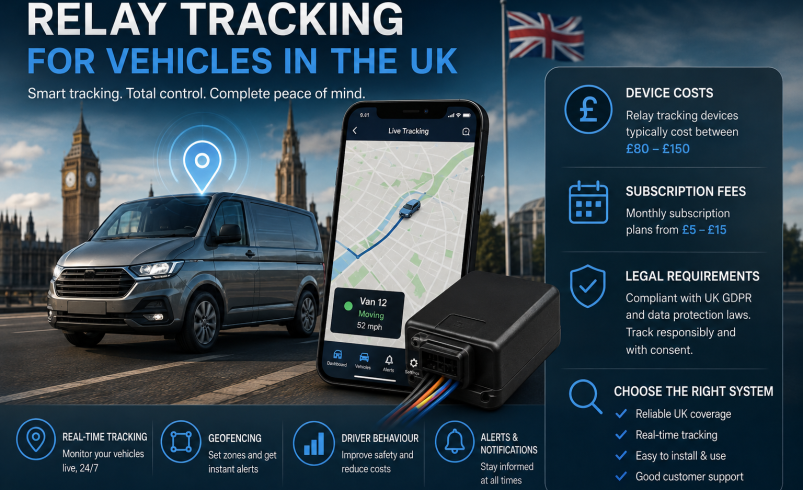
Are you looking for relay tracking solutions to protect your vehicle or assets? Relay tracking refers to GPS systems that transmit location data via cellular networks to a central server, allowing real-time monitoring through an app or web portal. Unlike simple Bluetooth tags, these devices offer nationwide coverage and advanced features like geofencing and motion alerts. In this guide, we will explain how the technology works, break down the typical costs for hardware and subscriptions, and outline the legal considerations for UK users. You will learn what to look for when buying a tracker, how to install it correctly and which providers offer the best value. Whether you are a business owner managing a fleet or a private individual protecting a classic car, this information will help you make an informed choice.
What Is Relay Tracking and How Does It Work?
Relay tracking uses Global Positioning System (GPS) satellites to determine a device’s location. The tracker then “relays” this data to a central server using cellular networks (4G/5G). This two-step process ensures accurate positioning and reliable data transmission.
The device contains a GPS receiver and a SIM card. When powered on, it connects to GPS satellites to calculate its coordinates. It then sends this information via the mobile network to the provider’s cloud platform. Users can access this data through a smartphone app or website. Most modern trackers update every few seconds or minutes, depending on the settings.
This technology differs from Bluetooth trackers like Apple AirTags, which rely on nearby devices to report location. Relay trackers work independently anywhere there is mobile signal. This makes them ideal for vehicles that travel long distances or operate in rural areas. They also offer historical data, allowing you to review past routes and stops.
Types of Relay Tracking Devices
Not all trackers are the same. Choosing the right type depends on your specific needs and installation preferences.
OBD-II Trackers
These plug directly into the On-Board Diagnostics (OBD-II) port, usually located under the dashboard. They draw power from the vehicle’s battery, so no wiring is required. Installation takes seconds. However, they are visible and can be easily removed by thieves. They are best for temporary monitoring or fleet management where ease of use is priority.
Hardwired Trackers
Hardwired units connect directly to the vehicle’s electrical system. They are hidden behind panels or under seats, making them difficult to detect. Professional installation is recommended to avoid damaging the vehicle’s electronics. These trackers often include backup batteries to continue reporting if the main power is cut. They are the most secure option for high-value vehicles.
Battery-Powered Trackers
These standalone devices have their own internal battery. They can be placed anywhere, such as in a glovebox or under a seat. Battery life varies from weeks to months, depending on update frequency. Some models use magnetic cases for easy attachment to metal surfaces. They are versatile but require regular charging or replacement.
Typical Costs for Relay Tracking in the UK
Understanding the cost structure helps you budget effectively. Prices vary based on hardware quality and service features.
Hardware Costs
Basic OBD-II trackers start from around £30 to £50. More advanced hardwired units with backup batteries cost between £80 and £150. Premium devices with additional sensors (like temperature or fuel level) can exceed £200. Always check if the price includes the SIM card or if you need to buy one separately.
Subscription Fees
Most relay tracking services require a monthly or annual subscription. This covers the cellular data usage and access to the software platform.
- Monthly Plans: Typically range from £5 to £15 per month.
- Annual Plans: Often offer discounts, costing between £50 and £120 per year.
- Lifetime Deals: Some providers offer a one-time fee for unlimited data, though these are less common now due to rising network costs.
Check for hidden fees like activation charges or early termination penalties. Some business accounts may have volume discounts.
Installation Costs
If you choose a hardwired tracker, professional installation costs between £50 and £100. Many auto electricians offer this service. OBD-II and battery-powered units do not require professional help, saving you this expense.
Legal Considerations for UK Users
Using relay tracking devices must comply with UK laws. Ignorance of the law is not a defence, so it is important to understand your obligations.
Data Protection and GDPR
If you track a vehicle used by employees or other people, you must comply with the General Data Protection Regulation (GDPR). You need a lawful basis for processing personal data, such as legitimate interest or consent. You must inform drivers that they are being tracked. Hidden tracking of employees without their knowledge is likely illegal and a breach of privacy rights.
For private vehicles, tracking your own car is generally legal. However, if you track a vehicle owned by someone else, even a family member, you must have their permission. Stalking laws also apply, so using a tracker to monitor someone without their consent is a criminal offence.
Insurance Requirements
Some insurance companies offer discounts for fitted trackers. Check with your provider to see if they have approved lists of devices. Installing a non-approved tracker may not qualify for a discount. Always declare the modification to your insurer to ensure your policy remains valid.
Road Traffic Regulations
Ensure the tracker does not obstruct the driver’s view or interfere with vehicle controls. While small devices are rarely an issue, poor installation of hardwired units could potentially affect safety systems. Professional installers will ensure compliance with roadworthiness standards.
How to Choose the Right Relay Tracking Provider
With many options available, selecting the right provider requires careful comparison.
Network Coverage
Check which mobile network the tracker uses. EE, Vodafone, O2 and Three have different coverage maps. If you drive in rural areas, choose a provider that uses a network with strong rural signal. Some trackers use multi-network SIMs that switch to the strongest available signal, offering better reliability.
App Usability
Download the provider’s app before buying if possible. Look for intuitive interfaces, clear maps and fast loading times. Features like geofencing (alerts when entering/leaving an area) and speed alerts should be easy to set up. Poor app design can make the system frustrating to use.
Customer Support
Good support is essential if things go wrong. Check reviews for response times and helpfulness. UK-based support is preferable for timezone alignment. Look for providers offering phone, email and chat support.
Contract Flexibility
Avoid long contracts if you are unsure. Monthly rolling contracts offer flexibility. Annual contracts save money but lock you in. Check the cancellation policy carefully.
Installation Tips for Best Performance
Proper installation ensures reliable tracking and longevity.
Positioning
For GPS signal reception, place the device where it has a clear view of the sky. Metal roofs can block signals, so avoid placing trackers directly under thick metal layers. Windshields or dashboards are good spots for OBD-II units. For hardwired units, test the signal strength before finalising the position.
Power Connection
If hardwiring, connect to a constant live wire for parking mode tracking. Connecting to an ignition-switched wire means the tracker only works when the car is running. Use fuse taps to avoid cutting existing wires. Ensure connections are secure and insulated to prevent short circuits.
Testing
After installation, test the system thoroughly. Drive to different locations to check signal consistency. Verify that alerts arrive promptly on your phone. Check the historical route accuracy. Report any issues to the provider immediately while under warranty.
Mistakes to Avoid
Even with good equipment, errors can reduce effectiveness.
Ignoring Updates
Keep the device firmware and app updated. Manufacturers release updates to fix bugs and improve security. Outdated software may have vulnerabilities or performance issues. Enable automatic updates if available.
Poor Password Security
Use strong, unique passwords for your tracking account. Weak passwords make it easy for hackers to access your location data. Enable two-factor authentication (2FA) if the provider offers it. This adds an extra layer of security.
Not Checking Battery Levels
For battery-powered units, monitor charge levels regularly. Letting the battery drain completely can damage it. Set up low-battery alerts if the app supports them. Keep a charger handy for emergencies.
Overlooking Geofence Settings
Geofences are powerful tools but can generate excessive alerts if set too small or in busy areas. Adjust the radius to suit your needs. A 100-meter radius is usually sufficient for home or work locations. Test and refine settings to avoid alert fatigue.
Frequently Asked Questions About Relay Tracking
Q: Do I need a SIM card for a relay tracker?
Yes, most relay trackers require a SIM card to transmit data via cellular networks. Some providers include the SIM in the subscription, while others require you to buy a separate data-only SIM. Check the product details before purchasing.
Q: Can relay trackers work underground or in garages?
GPS signals struggle to penetrate concrete and metal. If a vehicle is in an underground car park or sealed garage, the tracker may lose GPS signal. However, some advanced units use Wi-Fi positioning or cell tower triangulation as a backup to provide an approximate location.
Q: How accurate are relay tracking devices?
Modern GPS trackers are typically accurate within 2 to 5 meters in open skies. Accuracy can decrease in urban canyons with tall buildings or dense tree cover. Multi-system GNSS (using GPS, Galileo, GLONASS) improves accuracy and reliability.
Q: Is it legal to track my spouse’s car?
No, not without their consent. Tracking someone without their knowledge is a breach of privacy and may constitute stalking under UK law. You must have explicit permission from the vehicle owner and driver.
Q: Do relay trackers drain the car battery?
OBD-II and hardwired trackers draw minimal power. Modern vehicles have batteries designed to handle small loads. However, a faulty installation or a very old battery could lead to drainage. Hardwired units with sleep modes minimise power consumption when the vehicle is off.
Q: Can I use a relay tracker abroad?
Many UK trackers work in Europe and other regions if they support roaming. Check if the provider offers international coverage and what the roaming charges are. Some devices require a local SIM for non-UK use to avoid high fees.