
 Haris
Haris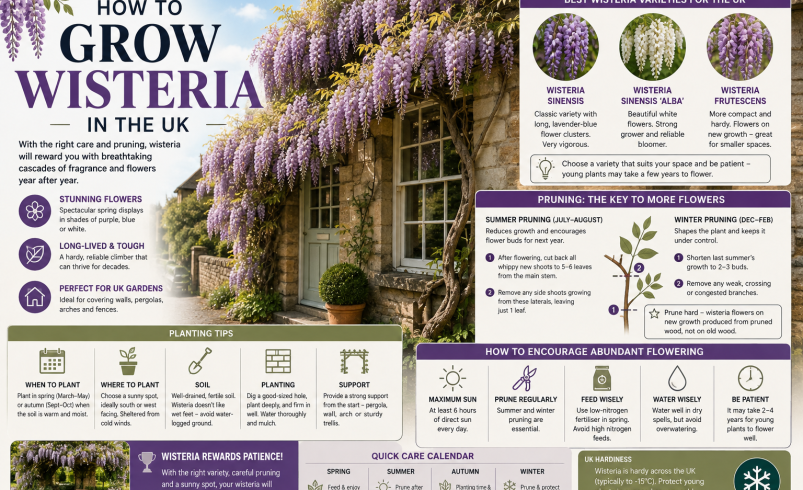
Are you struggling to get your wisteria to flower or wondering if it will damage your home? This vigorous climbing plant is a staple of British gardens, famous for its cascading lilac blooms and sweet scent. However, it requires specific care, particularly when it comes to pruning, to ensure it flowers well and does not become invasive. In this guide, we will explain exactly how to plant, train and maintain wisteria in the UK climate. You will learn the difference between the two main species suitable for our weather, the correct twice-yearly pruning method, and how to solve common problems like lack of flowers. Whether you are starting from scratch or trying to tame an existing giant, these practical steps will help you manage this beautiful but demanding climber.
Choosing the Right Wisteria for Your Garden
Not all wisteria are created equal. For UK gardens, two species are primarily recommended due to their hardiness and reliability.
Wisteria sinensis (Chinese Wisteria)
This is the most common variety found in the UK. It is vigorous and can grow up to 9 metres or more. It flowers in late spring, typically May, before the leaves fully emerge. The blooms hang in long, dramatic racemes. A key characteristic is that it twines clockwise. While stunning, it requires strong support and regular pruning to keep it in check. Popular cultivars include ‘Amethyst Falls’, which is slightly less vigorous and flowers at a younger age.
Wisteria floribunda (Japanese Wisteria)
Japanese wisteria is generally less vigorous than its Chinese counterpart, making it easier to manage in smaller gardens. It flowers slightly later, usually in June, after the leaves have appeared. The flower racemes are shorter but still impressive. Crucially, it twines anti-clockwise. This distinction helps identify which type you have when pruning. Varieties like ‘Black Dragon’ offer deep purple blooms and are highly sought after.
Other Varieties
You may encounter Wisteria brachybotrys (Silky Wisteria), which has broader leaves and fragrant white or pale lilac flowers. It is less common but hardy. Avoid Wisteria frutescens (American Wisteria) if you want dramatic displays, as its flowers are smaller and less showy, though it is very hardy.
Planting Wisteria: Location and Soil
Success with wisteria starts with the right position. It is a long-term commitment, as these plants can live for decades.
Sunlight Requirements
Wisteria needs full sun to flower well. Aim for at least six hours of direct sunlight daily. A south or west-facing wall is ideal. If planted in shade, the plant will grow vigorously but produce few or no flowers. The warmth of a sunny wall also helps ripen the wood, which encourages bud formation for the following year.
Soil Conditions
It prefers moist, well-drained soil. Heavy clay should be improved with organic matter like garden compost or well-rotted manure to aid drainage. Sandy soils may need added bulk to retain moisture. Wisteria is not fussy about pH but thrives in neutral to slightly alkaline conditions. Avoid waterlogged sites, as wet feet can lead to root rot.
Support Structures
Because wisteria is heavy, it needs robust support. Wooden trellises may break under the weight of mature stems. Use galvanised steel wires fixed to the wall with vine eyes. Space the wires 30 to 45 cm apart horizontally. Ensure the fixings are secured into brick or stone, not just mortar. Freestanding pergolas must be built from sturdy timber or metal to withstand the strain.
How to Prune Wisteria Correctly
Pruning is the most critical aspect of wisteria care. Without it, the plant becomes a tangled mass of foliage with few flowers. The Royal Horticultural Society (RHS) recommends pruning twice a year.
Summer Pruning (July or August)
The goal of summer pruning is to control growth and encourage flower buds.
- Identify the current year’s whippy green shoots. These are the long, flexible stems that have grown since spring.
- Cut these shoots back to five or six leaves from the main stem. This shortening directs energy into creating flower buds rather than more leaves.
- Do not prune the woody framework during summer. Focus only on the new green growth.
- This process keeps the plant tidy and exposes the developing buds to sunlight.
Winter Pruning (January or February)
Winter pruning shapes the plant and removes excess wood.
- Wait until the leaves have fallen so you can see the structure clearly.
- Cut back the summer-pruned shoots further, leaving two or three buds on each. These buds will become the flower spurs.
- Remove any dead, damaged or crossing branches.
- Thin out overcrowded areas to improve air circulation.
- This severe cut-back ensures the energy goes into the remaining buds, resulting in bigger blooms.
Training Young Wisteria Plants
If you start with a young plant, training it early saves effort later.
Year One
Plant in autumn or spring. Choose a single strong shoot to be the main stem. Tie it vertically to your support wire. Remove any side shoots that compete with this leader. Let the main stem grow to the desired height.
Year Two
Once the main stem reaches the top of your support, cut off the tip to stop upward growth. This encourages side branches to form. Select two or three strong side shoots to form the horizontal framework. Tie these horizontally along the wires. Prune the other side shoots back to a few buds.
Year Three and Beyond
Continue to extend the horizontal framework. Fill in gaps with secondary branches. Always tie new growth to the wires to guide it. Once the framework is established, switch to the regular summer and winter pruning routine. Patience is key; it may take three to five years for a young plant to flower heavily.
Encouraging Flowers on Mature Plants
If your wisteria is healthy but not flowering, several factors could be at play.
Lack of Sunlight
As mentioned, shade is the number one enemy of flowering. If a nearby tree or building has started to cast shadow, consider trimming the obstruction or moving the plant. Without sufficient light, bud initiation fails.
Excessive Nitrogen
High-nitrogen fertilisers promote leafy growth at the expense of flowers. Avoid general-purpose lawn feeds or high-nitrogen shrub foods near the roots. Instead, use a balanced fertilizer or one higher in potassium (potash) in spring. Sulphate of potash is a good option to encourage blooming.
Youth
Wisteria grown from seed can take up to 20 years to flower. Most nursery plants are grafted or layered, which means they should flower within three to five years. If you have a seedling, be patient or consider grafting a flowering spur onto it. Buying from a reputable nursery ensures you get a mature cultivar.
Incorrect Pruning
Pruning at the wrong time, such as in spring, can remove flower buds. Always stick to the July/August and January/February schedule. Missing a pruning session can lead to excessive vegetative growth, delaying flowering by a year or more.
Problems and Pests
While generally hardy, wisteria can suffer from specific issues.
Aphids
Greenfly and blackfly often attack young shoots in spring. They cause curling leaves and excrete honeydew, which leads to sooty mold. Blast them off with a jet of water or use an organic insecticidal soap. Encourage ladybirds and lacewings, which are natural predators.
Leaf Spot
Brown spots on leaves can indicate fungal infection. This is usually cosmetic and does not harm the plant significantly. Improve air circulation through pruning. Rake up fallen leaves in autumn to reduce spores overwintering.
Root Rot
In poorly drained soil, roots may rot. Signs include yellowing leaves and stunted growth. Improve drainage by adding grit or organic matter. In severe cases, the plant may need to be moved. Prevention is better than cure, so ensure good drainage at planting.
Scale Insects
These appear as small brown bumps on stems. They suck sap and weaken the plant. Scrape them off manually or use a horticultural oil spray in winter when the plant is dormant.
Is Wisteria Dangerous to Houses?
A common concern is whether wisteria damages buildings. The plant itself does not secrete acids that eat into brickwork. However, its woody stems are heavy and can dislodge loose tiles, gutters or fascia boards if they grow behind them.
Roots are vigorous but rarely destructive to solid foundations. They may seek out cracks in old pipes or weak mortar, so plant at least 1.5 metres away from walls and drains. Regular maintenance prevents most structural issues. Never let stems grow under roof tiles or into window frames. Keep the plant trained on its support system.
Frequently Asked Questions About Wisteria
Q: Why is my wisteria not flowering?
The most common reasons are lack of sun, incorrect pruning or too much nitrogen. Ensure it gets full sun, prune twice a year as described, and avoid high-nitrogen feeds. It may also be too young if grown from seed.
Q: When is the best time to plant wisteria?
Autumn (October to November) or spring (March to April) are the best times. Autumn planting allows roots to establish before winter. Spring planting avoids frost risk for young specimens. Keep the soil moist during the first year.
Q: Can I grow wisteria in a pot?
Yes, but it requires careful management. Use a large container (at least 45cm wide) with good drainage. Choose a less vigorous variety like ‘Amethyst Falls’. Prune regularly to keep size down. Feed and water consistently, as pots dry out faster.
Q: How fast does wisteria grow?
It is very vigorous. Once established, it can grow 3 metres or more in a single season. This rapid growth is why regular pruning is essential. Without control, it can quickly overwhelm small structures.
Q: Is wisteria poisonous?
Yes, all parts of the plant, especially the seeds and pods, are toxic if ingested. They contain wisterin, which can cause vomiting and diarrhoea. Keep children and pets away from the seed pods. Wear gloves when pruning to avoid skin irritation.
Q: How do I know if I have Chinese or Japanese wisteria?
Check the direction of twining. Chinese wisteria (Wisteria sinensis) twines clockwise. Japanese wisteria (Wisteria floribunda) twines anti-clockwise. Also, Chinese wisteria flowers before leaves appear, while Japanese flowers after leaves emerge.