 Haris
Haris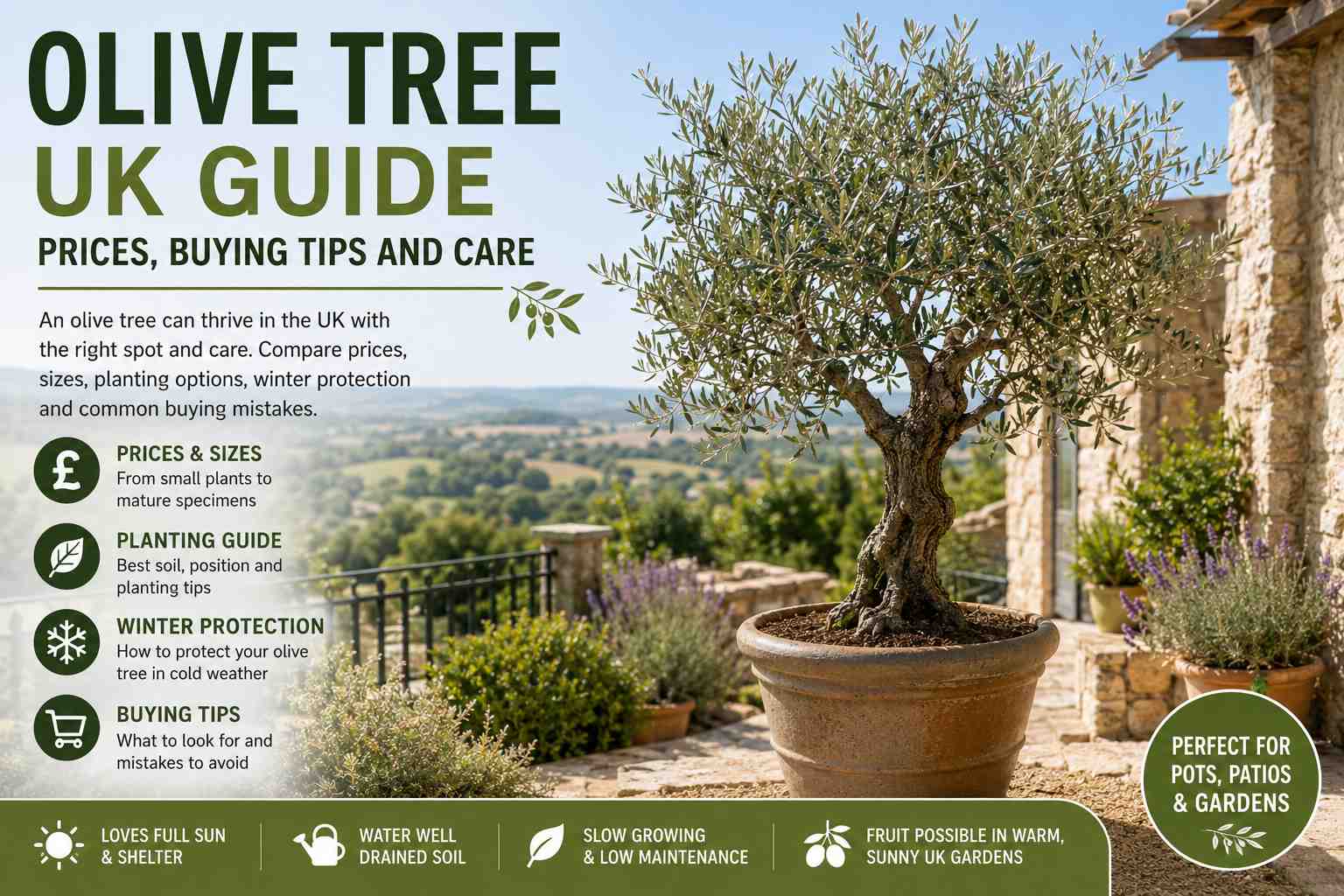
“Which olive tree should I buy for my garden?” An olive tree can work very well in the UK, especially when you give it full sun, shelter from harsh weather and sharply drained soil. The right purchase depends on your garden, available space, winter conditions and whether you want foliage, flowers or a realistic chance of harvesting fruit.
This guide covers UK prices, sizes, containers, planting, feeding, pruning, winter care, plant passports and the common mistakes that can turn an attractive purchase into a struggling tree.
Olive tree prices in the UK
Prices vary sharply because sellers offer everything from small patio plants to large, shaped and ancient specimens. Current online listings can range from roughly £20 to well over £1,000 depending on size, age, cultivar and delivery.
| Tree type | Typical example price | Typical buyer |
| Young olive tree | £20 to £40 | Patio or starter plant |
| Small standard | £40 to £70 | Small garden or container |
| Medium standard | £70 to £150 | Larger patio or garden |
| Mature specimen | £200 to £700+ | Feature tree |
| Ancient or large gnarled specimen | £700 to £1,450+ | Large garden or statement planting |
Prices are examples rather than fixed UK market rates. Delivery can also alter the final cost, particularly for large trees, so compare the delivered price rather than the headline figure.
What size olive tree should you buy?
Tree size affects both the price and the amount of aftercare you’ll need. A young tree is cheaper and easier to move, but a large specimen gives you the mature appearance much sooner.
For a normal patio, a compact standard or smaller potted tree is often the easiest option. For a large garden, a shaped or multi-stem specimen can provide a stronger focal point.
The RHS gives common olives a potential mature height of 4 to 8 metres, with a spread of around 1.5 to 2.5 metres.
Where should you plant an olive tree?
An olive tree needs as much light as you can reasonably provide. The RHS recommends full sun, a sheltered position and well-drained soil, with a south-facing position being particularly suitable.
A sunny wall can help by providing warmth and some protection from cold winds. Avoid low areas where rainwater sits because prolonged wet conditions are a major risk.
The RHS rates Olea europaea as H4, meaning it is hardy through most of the UK down to roughly -10°C to -5°C under the RHS hardiness system.
Growing an olive tree in a pot
Containers are one of the easiest ways to grow olives in Britain. They let you control the soil and drainage, restrict the eventual size and, where needed, move the plant into a more sheltered position during severe winter weather.
Use a free-draining, soil-based compost, such as peat-free John Innes No. 3 with added sharp grit. Make sure the pot has drainage holes and raise it on pot feet so rainwater can escape freely.
How to plant an olive tree
Planting is straightforward when the site and drainage are right.
- Choose the position. Pick the sunniest sheltered spot available and avoid ground that stays wet.
- Prepare the soil. Loosen compacted ground and improve drainage where necessary.
- Set the tree at the right level. Place the rootball so the top sits at approximately the surrounding soil level.
- Backfill carefully. Firm the soil around the roots without compacting it excessively.
- Water thoroughly. Give the newly planted tree a good drink and continue checking moisture while it establishes.
- Support it if needed. A stake can help a young tree remain stable until its roots take hold.
How much water does an olive tree need?
Established olives cope with dry conditions, but a newly planted or container-grown tree still needs regular watering. Container plants have less soil available to hold moisture and can dry out quickly in warm weather.
Water thoroughly, then allow excess water to drain. Don’t leave the pot sitting in a tray of stagnant water, particularly through winter.
Feeding and pruning an olive tree
Olives in the ground generally need less feeding than container-grown plants. Container trees have a limited supply of nutrients, so regular feeding during the growing season can help keep foliage and growth healthy.
Pruning is mainly about shape, size and removing damaged growth. Remove dead, diseased or dying branches and avoid cutting heavily simply to make the tree look smaller.
Can olive trees survive UK winters?
Yes, but winter protection depends on location, tree age and how the plant is grown. A sheltered, established tree in a mild part of southern Britain has different risks from a young tree in an exposed northern garden.
Severe frost can damage branches, while roots in containers are more exposed because they sit above ground. Potted olives may need a sheltered position or breathable horticultural fleece during severe weather.
Will an olive tree produce olives in the UK?
It can, but a good crop isn’t guaranteed. UK conditions can provide enough warmth for flowering and fruiting in favourable gardens, particularly in sunny and sheltered locations.
The RHS says some cultivated varieties may fruit in the UK during hot summers and in suitable southern gardens. A newly planted tree can take several years to bear fruit.
If fruit is your priority, check the cultivar before buying rather than choosing solely on appearance.
Which olive tree should you choose?
The best choice depends on what you want from the plant.
| Your priority | Good starting choice | Why |
| Small patio | Mini or compact tree | Easier to move and manage |
| Front door feature | Standard tree | Neat shape and strong visual effect |
| Large garden | Mature specimen | Immediate structure and presence |
| Fruit | A named fruiting cultivar | Better choice when harvest matters |
| Easy winter management | Container-grown tree | Can be moved to shelter |
| Statement planting | Large gnarled tree | Mature character from day one |
Ask the seller about the variety, pot size, growing conditions and whether the tree has been raised in the UK or imported.
What should you check before buying?
Inspect the plant rather than choosing on height alone. Healthy foliage should look reasonably full, while the stem and branches should be free from obvious damage.
Check the pot for blocked drainage and look underneath for roots escaping heavily through the drainage holes. Ask how the tree has been grown and where it came from.
Plant passports and buying from UK sellers
Plant health paperwork matters when purchasing plants online. GOV.UK says plant passport requirements apply to plants for planting moved within Great Britain, including England, Scotland and Wales, and also cover qualifying distance sales.
You don’t normally need to handle the passport process yourself as a home gardener. Use a reputable seller and check that the plant has been supplied through the required plant health system.
Common olive tree buying mistakes
The most expensive mistake is often buying too much tree for the available space. A large specimen can look impressive online but become difficult to move, plant and protect from severe weather.
Other mistakes are easier to avoid:
- Choosing a shaded position.
- Buying a cheap plant without checking size, drainage and condition.
- Using a container that stays wet during winter.
- Assuming an established-looking tree will immediately produce a large crop.
- Buying from an unknown online seller without checking plant health information.
- Forgetting to budget for a heavy pot, suitable compost and delivery.
- Moving a potted tree outdoors before the risk of frost has passed.
Where can you buy an olive tree in the UK?
UK buyers have several options, ranging from national garden retailers to specialist nurseries.
Before ordering, compare the exact height, pot size, delivery charge, cultivar and return terms. A cheaper tree can become less attractive if delivery is expensive or the plant isn’t suitable for your site.
Frequently asked questions
Q: Can olive trees grow in the UK?
Yes. Olive trees can grow well in the UK when planted in full sun, sheltered from harsh weather and kept in sharply drained soil.
Q: How much does an olive tree cost in the UK?
Small olive trees can cost around £20 to £40, while mature specimens can cost hundreds or more than £1,000. Price depends heavily on size, age, cultivar and delivery.
Q: Can I keep an olive tree in a pot?
Yes. Olives suit container growing when planted in a large container with good drainage and free-draining compost.
Q: How often should I water an olive tree?
Check the compost regularly, water thoroughly when needed and make sure excess water drains away. Avoid keeping the roots permanently wet.
Q: Can I grow an olive tree indoors?
Olives generally perform better outdoors because they need strong light and good air movement. A bright patio or balcony is usually better than an indoor position.
Q: When should I plant an olive tree?
Spring is a good time for planting olives in the ground. Container-grown trees have more flexibility, subject to frost and weather conditions.
Q: Will my olive tree produce fruit?
It can, especially in a warm, sunny and sheltered garden. UK fruiting isn’t guaranteed, and young trees can take several years to produce olives.
Q: Do olive trees need winter protection in the UK?
Some do. Severe frost can damage foliage and branches, while potted trees are more vulnerable at the roots. Shelter and fleece can help.
Q: Do I need a plant passport when I buy an olive tree online?
Plant passport requirements apply to the professional supply chain, including qualifying online distance sales in Great Britain. Buyers should use reputable sellers.