 Haris
Haris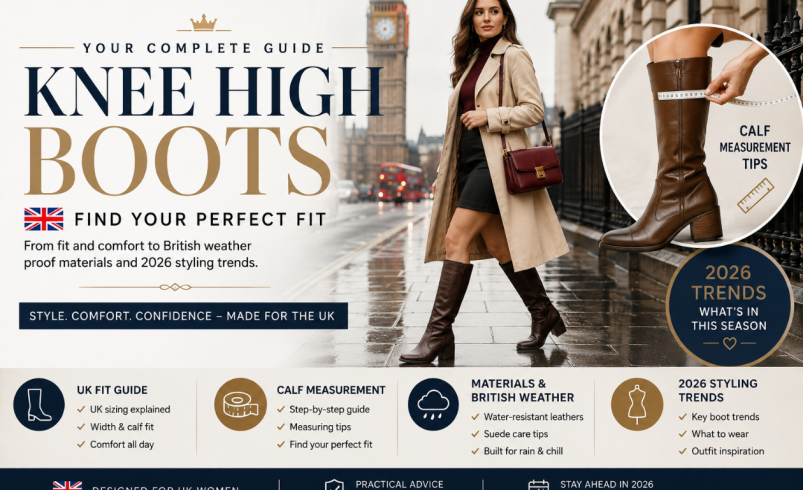
Finding knee high boots that actually fit your calves and suit the unpredictable British weather is a common frustration for UK shoppers. The right pair depends less on fashion trends and more on accurate measurements, shaft height proportions and material choices that withstand rain. This guide explains exactly how to measure your calf, which UK brands offer genuine wide or narrow fittings, and how to style knee high boots for autumn and winter 2026. You will also learn practical care routines for leather and suede to protect your investment from damp conditions. Every recommendation below is based on current UK retail standards and verified sizing data rather than generic international advice.
How to Measure Your Calf Correctly
Accurate calf measurement is the single most important step before buying knee high boots online in the UK. Sit on a chair with your feet flat on the floor and knees bent at a 90-degree angle. Wrap a flexible fabric tape measure around the fullest part of your calf without pulling tight or leaving gaps. Record the circumference in centimetres, as most UK specialist boot retailers use metric sizing increments of 2cm to 3cm.
Understanding UK Boot Shaft Measurements
Shaft height determines whether boots hit at, below or above your knee, which affects both comfort and proportion. Standard knee high boots typically have a shaft height of 35cm to 40cm, but this varies significantly by brand and foot size. Petite-specific designs often feature shafts of 35cm or less to prevent the boot from extending over the kneecap. Always compare your own lower leg length against the product’s shaft measurement rather than relying solely on the “knee high” label.
[Table: UK Boot Calf Width Fitting Guide]
| UK Fitting Code | Calf Circumference (cm) | Suitable For |
| Slim / Narrow | 30cm to 32cm | Slender legs, petite frames |
| Standard / D Fit | 34cm to 36cm | Average calf width |
| Wide / E Fit | 38cm to 40cm | Fuller calves, muscular legs |
| Extra Wide / EE+ | 42cm to 48cm | Significantly wider calves |
Choosing Materials for UK Weather Conditions
Leather remains the most practical choice for British winters due to its natural water resistance and durability in wet conditions. Smooth leather wipes clean easily after exposure to road salt and mud, making it ideal for daily commuting. Suede offers a softer, more luxurious aesthetic but requires proactive waterproofing before first wear to prevent staining. Apply three coats of suede-safe waterproofing spray, allowing each layer to dry fully between applications.
Suede Care in Damp Climates
Contrary to popular belief, properly treated suede performs well in rain because it rarely shows salt stains compared to smooth leather. Use a suede brush regularly to lift the nap and remove surface dirt before it sets. Store boots with shoe trees or rolled magazines to maintain shape during humid periods. Avoid wearing untreated suede in heavy downpours, as saturation can permanently alter the texture despite later drying.
Styling Knee High Boots for Autumn Winter 2026
Current UK fashion trends favour flat or low-block heel knee high boots paired with midi skirts or slip dresses for daytime wear. Sheer tights worn with mini skirts create a contemporary silhouette that balances coverage with modern styling. Denim co-ords combined with sheer socks and knee high boots have emerged as a key transitional outfit for early autumn. Pointed-toe styles add structure when worn with straight-leg jeans tucked into the shaft.
Proportions for Different Heights
Petite wearers should seek shaft heights under 36cm to avoid cutting the leg line awkwardly at the knee. Boots hitting precisely at the kneecap tend to shorten the appearance of shorter legs, whereas those sitting just below create a streamlined effect. Taller individuals can opt for shafts up to 42cm without overwhelming their frame. Block heels provide stability on wet pavements while maintaining the elevated look required for evening occasions.
UK Brands Specialising in Calf Width Variations
Several UK-based retailers now offer dedicated calf width sizing beyond standard high street options. DuoBoots provides eight distinct calf widths ranging from 30cm to 48cm alongside separate petite and tall shaft lengths. JJ Footwear specialises exclusively in wide calf designs with detailed centimetre measurements listed for every product. ASOS DESIGN and Yours Clothing offer budget-friendly wide-calf options in UK sizes 2 to 10 with trend-led seasonal updates.
Where to Find Narrow or Slim Fittings
Slim-calf wearers often struggle with gaping shafts on standard boots, but niche UK suppliers address this gap. Pretty Small Shoes stocks over 850 styles specifically designed for smaller feet and narrower calves with London-based customer service. Jones Bootmaker publishes detailed calf fitting tables correlating shoe size to expected shaft circumference for precise matching. Check product descriptions for actual centimetre measurements rather than relying on vague “slim fit” labels that vary between brands.
Frequently Asked Questions
Q: How do I know if I need wide calf knee high boots?
Measure your calf circumference at its widest point while seated with feet flat. If your measurement exceeds 37cm, standard UK boots will likely feel tight or fail to zip. Compare your measurement against the specific brand’s size chart, as “wide” definitions vary significantly between retailers. Many specialist UK brands list exact centimetre ranges rather than generic width letters.
Q: What shaft height is best for petite women under 5ft 4in?
Petite women should look for shaft heights between 33cm and 35cm to ensure the boot ends below the kneecap. Shafts taller than 36cm often extend over the knee on shorter legs, creating an unflattering horizontal line. Several UK specialists like DuoBoots offer dedicated petite ranges with proportionally reduced shaft heights across all calf widths. Always verify the exact shaft measurement in centimetres before purchasing.
Q: Are suede knee high boots suitable for UK winter weather?
Suede is suitable for UK winters only if pre-treated with multiple coats of waterproofing spray before first wear. Properly protected suede resists salt stains better than smooth leather and dries without permanent damage. Avoid wearing untreated suede in heavy rain or slush, as saturation causes irreversible texture changes. Regular brushing maintains the nap and prevents dirt buildup during damp months.
Q: Do knee high boots stretch over time?
Leather knee high boots typically stretch 0.5cm to 1cm in calf width with regular wear, but synthetic materials rarely give. Suede stretches slightly more than smooth leather due to its softer structure. Never buy boots expecting significant stretch, as excessive tightness causes discomfort and damages zippers. Choose a fit that feels snug but comfortable from the first wearing rather than hoping for future expansion.
Q: How should knee high boots fit around the ankle?
The ankle area should fit closely without pinching or creating pressure points when walking. Excessive gaping at the ankle indicates the boot is too large overall, even if the calf fits correctly. Lace-up or buckle-adjustable styles allow fine-tuning for narrower ankles while accommodating fuller calves. Zippered boots require precise ankle measurements to avoid heel slip or blisters. Test the fit while standing and walking, not just sitting.
Q: What heel height is most practical for UK pavements?
Block heels between 3cm and 5cm offer the best balance of style and stability on uneven or wet UK pavements. Stiletto heels sink into cobblestones and pose slip risks on damp surfaces, making them impractical for daily wear. Flat knee high boots remain on-trend for 2026 and provide maximum comfort for extended walking. Wedge soles distribute weight evenly and handle gravel paths better than concentrated heel points.
Q: Can I wear knee high boots with jeans in 2026?
Yes, tucking straight-leg or slim-fit jeans into knee high boots remains a core 2026 styling option. Avoid bulky denim that creates bunching inside the shaft, as this distorts the boot’s silhouette and causes discomfort. Cropped or ankle-length jeans work poorly with knee highs, leaving an awkward gap between hem and boot top. Dark washes create a continuous vertical line that elongates the leg when paired with matching boot colours.
Q: How do I stop knee high boots from slouching?
Boot shapers or rolled cardboard tubes inserted when stored prevent leather from collapsing and creasing. Choose boots with structured shafts and reinforced stitching rather than soft, unlined designs prone to sagging. Tighter calf fittings naturally resist slouching better than loose styles that lack support. Some brands include internal elasticated panels or adjustable straps to maintain upright positioning throughout the day.