 Haris
Haris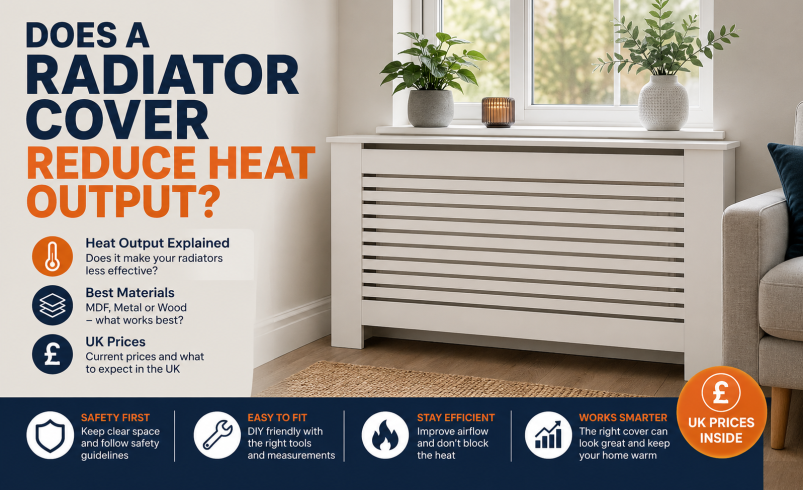
Do radiator covers block heat or are they just a stylish way to hide ugly pipework? A radiator cover can reduce heat output by 10% to 20% if poorly designed, but well-vented models with reflective backing minimise this loss significantly. This guide explains exactly how much efficiency you might sacrifice, which materials conduct heat best and what you should expect to pay in the UK right now. We also cover safety standards for homes with children, magnetic alternatives that avoid airflow restriction and step-by-step measuring tips so you do not order the wrong size. You will find clear answers to help you decide whether a cover is worth it for your specific heating system.
Do Radiator Covers Reduce Heat Output?
Yes, most radiator covers reduce heat output to some degree because they interfere with natural convection. Radiators warm rooms primarily by heating air that rises and draws cooler air in from below, creating a continuous circulation loop. Any enclosure slows this process, meaning the room takes longer to reach your target temperature and your boiler may run for longer cycles.
The Chartered Institute of Building Service Engineers (CIBSE) confirms that enclosures reduce output and must be factored into heating design calculations. If you add a cover after installation without upsizing the radiator, the space may never reach its intended comfort level during cold snaps.
How Much Heat Is Lost With Different Designs?
Heat loss varies dramatically based on ventilation, material thickness and clearance gaps. Poorly designed wooden boxes with solid tops and minimal grilles typically cause the highest losses, while open-fronted metal designs with reflective linings perform much better.
| Cover Type | Estimated Heat Reduction | Key Factor |
| Solid wood box, no top vent | 15% to 20% | Traps rising hot air |
| Slatted MDF, open top | 5% to 10% | Allows vertical airflow |
| Metal grille, reflective back | 0% to 5% | Conducts heat, redirects forward |
| Magnetic fabric wrap | Negligible | Does not restrict convection |
B&Q notes that covers with adequate ventilation only reduce output by around 5% to 10%, whereas fully enclosed designs push losses toward the upper end of the scale. Always check manufacturer specifications for tested output data rather than relying on generic claims.
Can a Radiator Cover Actually Improve Efficiency?
Some manufacturers claim their covers boost efficiency by directing heat forward instead of letting it rise straight to the ceiling. This effect is real but modest, and only applies when the cover includes a reflective back panel and an angled top shelf that pushes warmed air into the living zone.
Without these features, the “efficiency gain” argument does not hold up against physics. BestHeating points out that any benefit depends entirely on proper backing and sufficient clearance, and that bare radiators remain the most efficient option for pure heat transfer. Treat efficiency-boosting claims as conditional bonuses rather than guaranteed outcomes.
Choosing the Right Material for Your Radiator Cover
Material choice affects heat conduction, durability in humid spaces and overall aesthetic. Wood absorbs heat and acts as an insulator, while metal transfers warmth more effectively but can become hot to touch. Medium-density fibreboard (MDF) sits in the middle ground and remains the most common UK option due to its low cost and paintability.
Wooden and MDF Covers
Wooden radiator covers suit traditional interiors and provide a sturdy shelf surface for books or ornaments. However, timber has low thermal conductivity, meaning it absorbs radiant heat rather than passing it into the room. Thicker solid wood panels exacerbate this problem, so opt for slatted or fretwork designs that maximise airflow through the front face.
MDF offers similar aesthetics at lower cost and is easier to cut for DIY projects. Ensure any MDF cover uses moisture-resistant grade material if installed in bathrooms or kitchens, as standard MDF swells when exposed to steam. Painted finishes should use heat-resistant paint formulated for radiators to prevent yellowing or cracking over time.
Metal and Magnetic Alternatives
Metal covers conduct heat efficiently and often feature perforated patterns that maintain strong convection currents. Galvanised steel options resist rust and suit industrial or contemporary schemes, though they can reach higher surface temperatures than wood. Check product specs for maximum surface temperature if safety is a primary concern.
Magnetic radiator covers offer a completely different approach by wrapping directly onto the radiator surface without blocking airflow. Radwraps states their padded magnetic covers can lower surface temperatures below 43°C, meeting Health and Safety Executive guidance for safe touch temperatures in care settings. These wraps start from around £39.99 and install in seconds without tools, making them ideal for rented properties where permanent fixtures are not allowed.
Safety Considerations for UK Homes
Radiator covers serve an important safety function in households with young children, elderly residents or pets. Standard panel radiators can reach surface temperatures of 60°C to 80°C during operation, which causes burns within seconds of contact. A properly designed cover creates a protective barrier while still allowing heat to escape.
Child Safety and Surface Temperature Limits
The NHS advises keeping hot surfaces out of reach of toddlers, and radiator covers provide a physical barrier against accidental touches. For nurseries or playrooms, choose covers with small grille apertures that prevent little fingers from reaching through to the hot metal behind. Rounded edges and secure fixings that cannot be pulled off by curious hands are equally important.
In care homes or supported living environments, Low Surface Temperature (LST) radiators are often specified to stay below 43°C. If replacing radiators is not feasible, magnetic safety covers or purpose-built guards certified to LST standards offer a compliant alternative. Always verify third-party testing documentation rather than accepting manufacturer claims at face value.
Fire Safety and Clearance Requirements
Radiator covers must never obstruct ventilation or sit directly against the radiator casing. Maintain minimum clearances of 30mm at sides and front, plus 70mm above the unit, to allow adequate airflow and prevent heat buildup. Solid shelves placed directly on top of unvented covers create a fire risk if items like candles or electrical devices are left unattended.
Check that any wooden or MDF cover carries appropriate fire retardant certification for domestic furniture. Avoid placing flammable textiles directly against cover surfaces, and never use radiator covers to dry clothing as this blocks airflow and creates a significant fire hazard.
Measuring and Fitting Your Radiator Cover Correctly
Accurate measurements prevent costly returns and ensure your cover performs as intended. Include all valves and pipework in your width measurement, as these protrusions often get overlooked and result in covers that do not fit. Jali recommends adding 30mm clearance on each side and 70mm above the radiator to accommodate valve access and convection flow.
Step-by-Step Measuring Process
Follow this sequence to capture accurate dimensions for made-to-measure or adjustable covers:
- Measure the total width including valves and brackets at the widest point.
- Record the height from floor to top of radiator excluding pipework.
- Note the depth from wall to frontmost edge of radiator or valve.
- Check skirting board height and profile for scribing requirements.
- Photograph the radiator from front and side angles for supplier reference.
Use a rigid book or spirit level against the tape measure when reading depths to avoid parallax errors. Double-check all figures before ordering, as bespoke covers are typically non-returnable once manufactured.
Installation Tips for Rented Properties
Tenants should avoid drilling into walls or skirting boards without landlord permission. Magnetic covers and freestanding radiator cabinets that hook over the top edge provide temporary solutions that leave no damage upon removal. Adjustable tension-fit covers also work well in rentals, as they brace between floor and ceiling or wall without fixings.
When moving out, fill any screw holes with matching filler and repaint to restore the original condition. Document the property’s state before installation with dated photos to protect your deposit against unfair deductions.
Current UK Pricing for Radiator Covers
Prices vary widely depending on size, material and whether you choose off-the-shelf or bespoke manufacturing. Budget options from high street retailers start under £30, while custom hardwood cabinets can exceed £500 per unit. Delivery times for made-to-measure items typically range from four to eight weeks during peak periods.
| Type | Price Range | Lead Time | Best For |
| Flat-pack MDF (Argos/B&Q) | £29 to £88 | In stock | Quick budget refresh |
| Magnetic wrap (Radwraps) | £39 to £55 | 3 to 5 days | Rentals, child safety |
| Adjustable slatted cover | £80 to £150 | In stock | Standard-sized radiators |
| Bespoke MDF (Jali/GPD) | £260 to £480 | 4 to 8 weeks | Perfect fit, custom style |
| Handmade solid wood | £350 to £600+ | 6 to 12 weeks | Period properties, luxury finish |
Bespoke suppliers like Bartles charge £75 for small pine covers up to 655mm wide, rising to £210 for large units spanning 1300mm to 2400mm. Compare multiple quotes and factor in delivery costs, as oversized items often incur surcharges outside mainland UK postcodes.
Frequently Asked Questions
Q: Do radiator covers waste money on heating bills?
Yes, poorly ventilated covers increase heating costs by forcing your boiler to work harder. Well-designed covers with reflective backing and open tops typically add less than 10% to running costs. The financial impact depends on your tariff, usage patterns and whether you compensate by turning up thermostats.
Q: Are magnetic radiator covers safe for children?
Yes, magnetic covers like Radwraps reduce surface temperatures below 43°C and meet HSE safety guidelines. They attach without tools and cannot be easily removed by small children. Always verify the specific product’s safety certification before purchasing for nurseries or care settings.
Q: Can I put a TV or heavy objects on a radiator cover shelf?
Only if the cover is specifically rated for load-bearing and securely fixed to the wall. Most decorative covers support lightweight items like photo frames but not electronics weighing several kilograms. Check the manufacturer’s weight limit and use wall anchors for anything heavier than 2kg.
Q: Will a radiator cover cause damp or mould behind it?
Not if fitted correctly with adequate ventilation gaps and moisture-resistant materials. Damp usually results from pre-existing condensation issues or leaks that the cover then conceals. Address underlying ventilation problems first and use breathable paints or liners to prevent trapped moisture.
Q: How do I clean dust from inside a radiator cover?
Remove the front panel if it has magnetic catches or removable fixings, then vacuum with a brush attachment. Fixed covers require regular dusting through grille openings using a long-handled duster. Clean quarterly to maintain airflow efficiency and prevent dust circulation when heating activates.
Q: Do radiator covers work with smart thermostat valves?
They can, but TRVs inside covers read higher temperatures and shut off prematurely. Either position the valve outside the cover or increase the TRV setting by 2°C to 3°C to compensate. Some smart valve brands offer remote sensors that solve this issue entirely.
Q: What is the cheapest way to hide an ugly radiator?
Painting with specialist radiator paint costs under £20 and preserves full heat output. Magnetic wraps starting at £39 offer instant transformation without DIY skills. Both options avoid the efficiency penalties associated with boxed covers while achieving similar visual improvements.