Dental Implants Hungary Helvetic Clinics: The Full Guide
- August 18, 2026
- 0
Are dental implants in Hungary with Helvetic Clinics actually worth it for UK patients? Helvetic Clinics is a well known clinic in Budapest that offers dental implants at
Are dental implants in Hungary with Helvetic Clinics actually worth it for UK patients? Helvetic Clinics is a well known clinic in Budapest that offers dental implants at
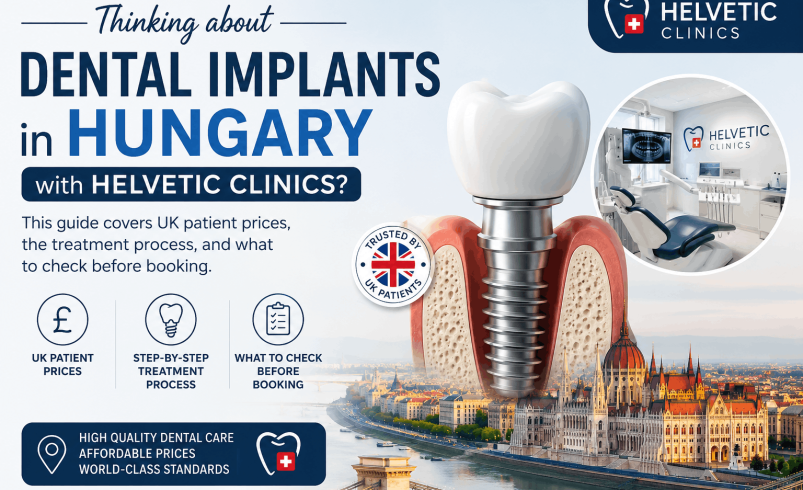
Are dental implants in Hungary with Helvetic Clinics actually worth it for UK patients? Helvetic Clinics is a well known clinic in Budapest that offers dental implants at roughly half the price you’d pay privately in the UK, and thousands of British patients travel there every year for that reason. This guide covers what a single implant or a full arch actually costs, how the treatment process works across multiple visits, what UK regulators say about the risks, and how to protect yourself if something goes wrong once you’re back home. You’ll also find a comparison table, a step by step breakdown of a typical case, and answers to the questions UK patients ask most before they book.
Helvetic Clinics is a private dental practice based in Budapest, with a smaller site in Győr. The clinic markets itself heavily to UK, Irish and Nordic patients, and it operates an in-house dental laboratory with its own technicians, which means crowns and prosthetics are made on site rather than sent out to a third party.
The clinic’s own site claims fixed euro pricing, a “Clinic-Hotel” setup where accommodation sits in the same building as the surgery, and ISO 9001:2015 certification. Third-party review platform Treatment Abroad lists the clinic among the more established Hungarian providers, with a long-running position in medical travel rankings. Budapest is around two and a half hours from most UK airports, which is the single biggest reason Hungary became the original hub for UK dental tourism, well before Turkey entered the market.
Price is the reason most people search for Helvetic Clinics in the first place, so it’s worth being specific rather than vague. Marketing pages and comparison sites put a single implant at Helvetic Clinics at roughly £830 to £1,200, against a typical UK private price of £2,000 to £2,800 for a single implant with crown, according to UK clinics that treat patients after they return from abroad.
That gap looks dramatic on paper. In practice, the total bill depends on how many implants you need, whether you need bone grafting or a sinus lift, and which restoration (crown, bridge or full-arch prosthesis) sits on top. Always ask for a written, itemised quote rather than a single headline figure, because the advertised “from” price rarely includes everything a full-arch case needs.
[Table: Indicative implant pricing comparison, showing single implant, All-on-4 full arch, and typical extras across UK private clinics, Helvetic Clinics Hungary, and a leading Istanbul provider, with source notes for each figure]
| Location | Single implant (approx.) | Full arch, All-on-4/6 (approx.) | Notes |
| UK private clinic | £2,000 to £2,800 | £15,000 to £25,000+ | Includes UK aftercare and GDC-registered dentist |
| Helvetic Clinics, Budapest | £830 to £1,200 | Priced per case, quote required | Fixed euro pricing, converted to GBP at the clinic’s own rate |
| Leading Istanbul clinic | From around £420 | Priced per case, quote required | Generally cheaper again than Hungary, per independent comparisons |
Exchange rates and clinic price lists change often. Check the current figure directly with Helvetic Clinics before you commit to anything, rather than relying on a price you saw on a comparison blog.
Dental implants are never finished in a single appointment, wherever you have them done. Understanding the full sequence matters more than the headline price, because it tells you how many flights, how much time off work, and how much uncertainty is actually involved.
A typical implant case at a Budapest clinic follows this pattern:
That’s two return flights minimum for a straightforward case, and potentially three if grafting is needed first. Factor accommodation, time off work and the flights themselves into your total cost, not just the clinic’s quoted price for the implant itself.
This is the question the top-ranking pages tend to skate over, and it’s the one that actually matters most. UK dentists must be registered with the General Dental Council (GDC), which sets professional standards and investigates complaints against anyone on that register. Hungarian dentists are not regulated by the GDC, and the GDC states plainly that it cannot investigate or take action against a dentist who only practises abroad, whatever went wrong.
Hungary does have its own regulatory body for dentists, and EU membership means Hungarian-trained dentists meet recognised European qualification standards. That’s a genuine point in Hungary’s favour compared with destinations outside the EU. It doesn’t, however, give you the same route to complain, claim compensation, or have a regulator strike off a dentist that you’d have if the same mistake happened in a UK surgery.
Data from the British Dental Association’s own membership survey found that 95% of UK dentists surveyed had examined a patient who’d had treatment abroad, and 86% of those had seen cases that developed complications, with implants and crowns the two treatments most likely to need follow-up work. That doesn’t mean most patients have problems. It does mean the risk is real enough that UK dentists are dealing with the fallout regularly.
This is the gap most competing guides leave open, and it’s the part you need to plan for before you fly, not after.
If you develop a genuine dental emergency, such as swelling that affects your breathing, that’s an A&E matter, wherever you are. For anything less urgent, NHS dentists are not obliged to take on remedial work for private treatment carried out abroad in the same way they would for NHS work done in England or Wales. You can be seen and assessed, but if the original treatment wasn’t done by your current dentist, guarantees like free repair or replacement within two months typically won’t apply, because those protections are tied to the original provider’s contract.
In practice, that means most patients who need corrective work after treatment abroad pay for it privately. Research cited by UK dental negligence solicitors put the typical repair cost at £500 or more, with over half of surveyed cases costing more than £1,000 and one in five exceeding £5,000. Before you book, ask Helvetic Clinics directly, in writing, what their guarantee actually covers, for how long, and whether it requires you to travel back to Budapest to claim it.
A UK Global Health Insurance Card (GHIC) is free and useful for genuine medical emergencies in the EU, but it was never designed for this. The GHIC explicitly does not cover travelling abroad specifically to receive planned treatment, and it never covers private care, so it won’t help with a dental implant appointment at Helvetic Clinics or with putting right a complication afterwards.
Standard travel insurance is often just as limited. Most policies treat elective cosmetic or dental procedures as a pre-existing arrangement rather than an insured event, so the procedure itself, and complications arising from it, are commonly excluded unless you buy specialist medical travel insurance designed for treatment abroad. Check the policy wording for “treatment abroad” cover specifically, rather than assuming a standard annual travel policy will step in if something goes wrong.
[Image: photo of a UK passport and GHIC card next to a boarding pass, use royalty-free image from Unsplash or Pexels]
Hungary was the original UK dental tourism destination, but it’s no longer the cheapest. Independent comparisons put leading Istanbul clinics anywhere from several hundred to over a thousand pounds cheaper than Helvetic Clinics for a multi-implant case, largely because Turkish clinic overheads and lab costs tend to run lower.
Hungary still has advantages that matter to some patients: EU regulatory standards, a shorter flight from most of the UK, and, in Helvetic Clinics’ case, an in-house laboratory rather than outsourced lab work. Turkey tends to win on raw price, particularly for full-arch cases, while Hungary is often positioned as the middle ground between UK prices and the lowest-cost destinations further afield.
Before you pay a deposit anywhere, get clear written answers to the following. A clinic that’s confident in its work should have no trouble answering all of them by email.
Q: Is Helvetic Clinics in Hungary safe for dental implants? Many UK patients report a good experience, and the clinic operates under Hungarian and EU regulatory standards rather than being unregulated. It isn’t overseen by the GDC, though, so if treatment goes wrong you don’t have the same complaints route you’d have with a UK dentist. Whether it’s “safe enough” for you depends on how comfortable you are with that gap in recourse.
Q: How much do dental implants cost in Hungary compared with the UK? Marketing and comparison sites put a single implant at Helvetic Clinics at around £830 to £1,200, against £2,000 to £2,800 at a UK private clinic. Full-arch cases vary too much to quote a single figure and need a written quote from the clinic itself. Always confirm the current price directly, since euro-to-pound conversions and clinic price lists change.
Q: Is Hungary cheaper than Turkey for dental implants? Generally not any more. Independent comparisons show leading Istanbul clinics pricing single implants from around £420, noticeably below Helvetic Clinics’ typical £830 to £1,200 range, with the gap widening further for full-arch cases.
Q: Does travel insurance cover dental implants abroad? Usually not. Most standard travel insurance policies exclude planned cosmetic or dental procedures and any complications that follow from them. You’d typically need a specialist medical travel insurance policy that explicitly covers treatment abroad, and even then you should check the wording before you rely on it.
Q: Can I get NHS treatment if something goes wrong with implants I had abroad? You can be assessed and treated for pain relief or urgent problems, but NHS dentists aren’t obliged to offer the same free repair or replacement guarantees that apply to work done under their own contract. Most patients end up paying privately for corrective work, which UK dental negligence solicitors put at £500 or more in typical cases.
Q: How many trips to Budapest do you need for a full set of implants? Most cases need at least two visits: one for the implant surgery, and a second, three to six months later, once the implant has fused with the bone, to fit the crown or bridge. Cases needing bone grafting first may need a third trip.
Q: What implant brands does Helvetic Clinics use? Sources describing the clinic’s own marketing reference established implant systems including Astratech and Alphabio, alongside premium brands referenced on some of the clinic’s country-specific sites. Ask the clinic to confirm the exact brand and specification in writing before you travel, since this affects both cost and long-term reliability.
Q: Is Helvetic Clinics regulated by the General Dental Council? No. The GDC only registers and regulates dental professionals practising in the UK. It has confirmed it cannot investigate or take action against a dentist who works exclusively abroad, even if that dentist treats UK patients.
Q: How do you complain if treatment at Helvetic Clinics goes wrong? You’d need to raise it directly with the clinic first, under Hungarian consumer and healthcare complaints processes rather than through the GDC. Get the clinic’s written complaints procedure before you book, including whether a dispute would need to go through the Hungarian courts, since UK legal routes are far more limited for treatment carried out abroad.