Trapstar: The Story Behind London’s Streetwear Brand
- August 18, 2026
- 0
If you’ve come across Trapstar on a hoodie, in a rapper’s music video, or on a friend’s Instagram and wondered what it actually is, the short answer is
If you’ve come across Trapstar on a hoodie, in a rapper’s music video, or on a friend’s Instagram and wondered what it actually is, the short answer is
If you’ve come across Trapstar on a hoodie, in a rapper’s music video, or on a friend’s Instagram and wondered what it actually is, the short answer is that Trapstar is a London streetwear brand built by three school friends from west London who started out selling hand-printed T-shirts at Portobello Market. It’s grown into one of the UK’s most recognised fashion labels, backed by Jay-Z’s Roc Nation and worn by Rihanna, Stormzy and A$AP Rocky. This piece covers where the brand came from, what it actually sells and for how much, and how to avoid the counterfeits that follow any brand this popular.
Trapstar is a British streetwear label known for graphic hoodies, tracksuits, jackets and accessories carrying its distinctive branding, including the “It’s a Secret” tagline that’s been part of the brand’s identity since its earliest days. The name comes from trap music, the rap subgenre that heavily influenced the founders’ original design references.
The brand sits at the intersection of London street culture and global celebrity fashion, and it’s built its reputation on limited drops rather than year-round mass availability, which is part of why individual pieces can be hard to find once a release sells out.
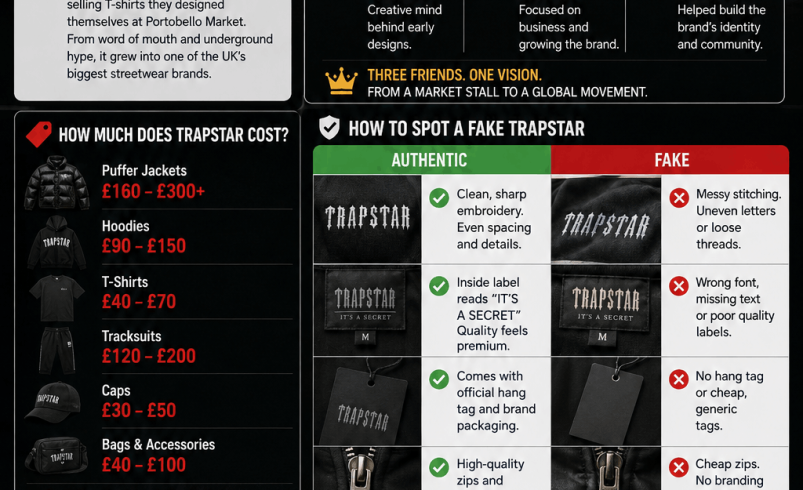
Trapstar was founded in 2008 by three school friends from west London, known publicly as Mikey, Lee and Will, according to BBC News coverage of the brand’s growth. The trio started by making their own T-shirts and selling them at Portobello Market in Notting Hill, working with limited resources and a deliberately secretive approach to marketing that became part of the brand’s appeal.
The early designs were sold largely through word of mouth, with the founders keeping their identities relatively private even as demand grew. That mystery, combined with the quality of the garments and their connection to London’s grime and rap scenes, helped Trapstar build a loyal following well before it had any formal retail presence beyond market stalls and pop-ups.
Trapstar’s biggest turning point came through a connection to the music industry rather than fashion retail. In 2013, the brand became the first fashion label signed to Jay-Z’s Roc Nation, bringing investment and international exposure while the three founders retained ownership of the business, according to reporting by The Face.
Since then, Trapstar has released multiple collaborations with Puma, spanning footwear, jackets and tracksuits sold through both Puma’s own channels and Trapstar’s official store. [Table: comparison of Trapstar’s own-label pieces versus Puma x Trapstar collaboration pieces, showing typical price and availability]
Trapstar’s visibility owes a lot to organic celebrity adoption rather than paid promotion. The brand designed official tour merchandise for Rihanna’s Monster tour, and its pieces have been worn publicly by Jay-Z, Stormzy, A$AP Rocky, Cara Delevingne and The Weeknd, among others.
Stormzy’s use of Trapstar underwear during his 2019 Glastonbury headline set is one of the most cited examples of the brand’s cultural reach, since it put Trapstar branding in front of one of the largest UK television audiences of that year.
Trapstar sits in the premium streetwear bracket, priced above high street brands but below true luxury fashion houses. Prices vary by collection and whether a piece is part of a standard release or a limited collaboration.
| Item type | Typical price range |
| T-shirts | £35 to £65 |
| Hoodies | £90 to £185 |
| Tracksuits | £150 to £295 |
| Jackets and outerwear | £150 to £300+ |
Prices change with every new collection and limited drop, so check the official Trapstar store for current pricing before you buy rather than relying on figures from an older post or a resale listing.
The safest route is Trapstar’s own official online store or its flagship location on Portobello Road in London, since both sell stock sourced directly from the brand. Buying through the official channel also means you’re covered by standard UK consumer protections under the Consumer Rights Act 2015 if an item arrives faulty or not as described.
Resale platforms such as StockX and Grailed also list Trapstar pieces, often with authentication services built into the checkout process, which reduces but doesn’t eliminate the risk compared with buying directly from the brand. Marketplaces without seller verification, including many listings on general auction and classifieds sites, carry the highest counterfeit risk and are where most fake Trapstar pieces circulate.
Counterfeit Trapstar pieces are common enough that the brand’s own retailers routinely warn customers away from unverified sellers. A few checks catch most fakes before you pay.
Whether Trapstar justifies its price comes down to what you’re buying it for. As a piece of UK streetwear history with genuine cultural roots and consistent quality control on official releases, it holds up against comparable premium streetwear brands. As a straightforward hoodie for warmth and basic style, you’ll pay a clear premium over high street alternatives for the branding and scarcity rather than for functional difference.
Resale demand for limited drops, particularly Puma collaborations, has kept some pieces holding or exceeding their original retail price on platforms like StockX, which is unusual for a streetwear brand outside the very top tier of hype labels.
Q: What does Trapstar mean? Trapstar takes its name from trap music, the rap subgenre that shaped the founders’ early creative references. The brand has no connection to any single artist and was built independently by its three founders.
Q: Who owns Trapstar? Trapstar is owned by its three original founders, known publicly as Mikey, Lee and Will, with Jay-Z’s Roc Nation holding a strategic investment since 2013. The founders have kept operational control of the brand throughout.
Q: Is Trapstar a luxury brand? No, Trapstar sits in the premium streetwear category rather than true luxury fashion. It’s priced above high street brands, with hoodies typically between £90 and £185, but below the price point of established luxury fashion houses.
Q: Why is Trapstar so expensive? Prices reflect limited drop releases, quality construction, and the brand’s cultural cachet built through organic celebrity adoption and the Roc Nation partnership rather than mass production. Scarcity plays a significant role, since popular pieces sell out and aren’t automatically restocked.
Q: Where is Trapstar’s flagship store? Trapstar’s flagship store is on Portobello Road in Notting Hill, west London, close to where the brand first began selling at the market in 2008.
Q: Is Puma x Trapstar the same as regular Trapstar? No, Puma x Trapstar is a specific collaboration line combining Puma’s footwear and apparel manufacturing with Trapstar’s branding and design, sold separately from Trapstar’s own-label releases. Both are official products, but they come through different production and distribution channels.
Q: How can I tell if my Trapstar hoodie is real? Check the stitching quality, print sharpness and label consistency against the current official catalogue, and be wary of prices significantly below the standard £90 to £185 hoodie range. Buying from Trapstar’s official store or flagship shop removes the guesswork entirely.