 Haris
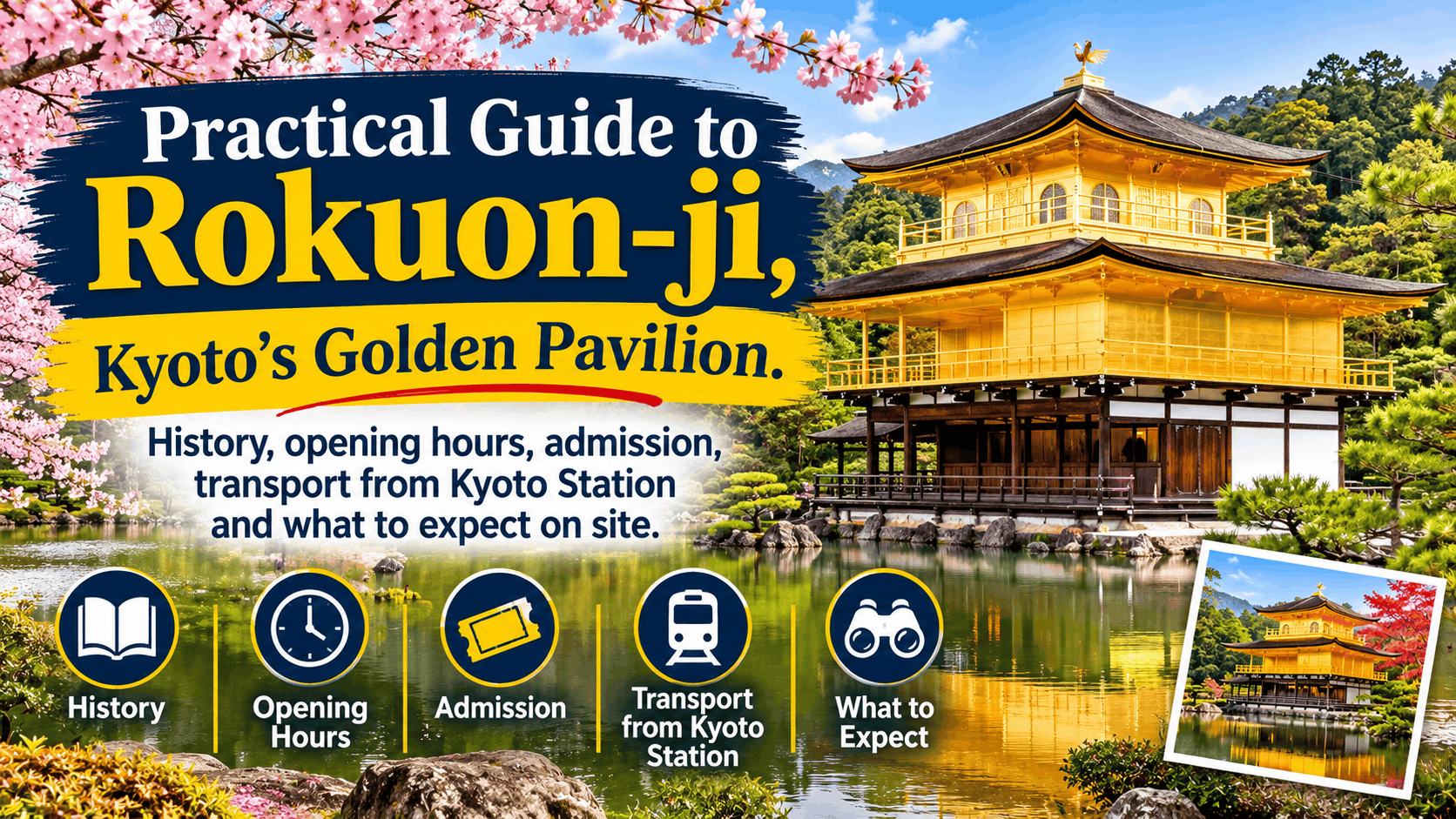
Rokuon-ji is the official name of the Zen temple in north-west Kyoto that most visitors know as Kinkaku-ji, the Golden Pavilion. The gold-leaf pavilion reflected in the Kyoko-chi pond is one of Japan’s most photographed sights, and the temple is a UNESCO World Heritage Site. This guide covers what you are actually seeing, how to get there without wasting time in traffic, and the details that most short online guides leave out.
Rokuon-ji or Kinkaku-ji? Understanding the Name
The names are not interchangeable in every context, but for a visitor they refer to the same place. Rokuon-ji is the temple’s formal name, taken from the first two characters of Shogun Ashikaga Yoshimitsu’s posthumous name. Kinkaku-ji, meaning Golden Pavilion Temple, is the common name that stuck because of the spectacular Shariden hall at the centre of the grounds.
The site began as a villa acquired by Yoshimitsu in 1397. After his death in 1408, it was converted into a Zen temple according to his wishes, with the renowned monk Muso Soseki installed as founding abbot. The temple belongs to the Shokoku-ji branch of the Rinzai sect of Zen Buddhism.
The Golden Pavilion Itself: What You Are Looking At
The three-storey Shariden is 12.5 metres tall, and roughly 200,000 sheets of gold leaf cover its second and third floors. Each floor uses a different architectural style: the ground floor is in the shinden style of Heian-period aristocratic residences, the second in a samurai residential style, and the third in the style of a Zen temple. This layering is deliberate. It represents the blending of aristocratic, warrior and Buddhist cultures that defined Yoshimitsu’s Kitayama era.
The building you see today is not the original. A 21-year-old novice monk burned the pavilion down in 1950, an event later fictionalised in Yukio Mishima’s novel The Temple of the Golden Pavilion. The reconstruction, completed in 1955, used detailed drawings from a 1904 conservation project to reproduce the original design. Further repairs and fire prevention work followed in the late 1980s and early 1990s.
Getting to Rokuon-ji from Kyoto Station
The temple sits in Kita Ward, north-west Kyoto. From Kyoto Station, the most straightforward route is also the most crowded: Kyoto City Bus 205 to the Kinkakuji-michi stop. Kyoto’s official city guide recommends a slightly different approach to reduce crowding and traffic delays. Take the Karasuma Subway Line to Kitaoji Station (about 15 minutes, 260 yen for adults), then transfer to City Bus 204 or 205 from the Kitaoji Bus Terminal (about 15 minutes, 230 yen). Get off at Kinkakuji-michi and walk a few minutes to the temple.
Fares and journey times are based on the city guide’s 2022 figures and should be checked before travel. A one-day subway and bus pass costs 1,100 yen for adults and 550 yen for children, which is worth considering if you are combining Rokuon-ji with other sights on the same day.
Opening Hours, Admission and Practical Details
The temple is open daily from 9:00 to 17:00, with no closing days listed. Admission is commonly reported at 500 yen for adults, though some sources still list 400 yen. Budget for 500 yen and carry cash. Trip.com contributors and other travel sources consistently note that payment is cash only.
The grounds are not simply a single pavilion. The garden, designated a Special Place of Scenic Beauty, was modelled after the gardens of Saiho-ji and uses Mt Kinugasa as a borrowed landscape. The Kyoko-chi pond, often called the Mirror Pond, is the viewpoint everyone photographs. Beyond it, the grounds include the Sekka-tei teahouse, a 600-year-old bonsai pine transplanted from Yoshimitsu’s collection, and the Fudo-do hall, the oldest surviving building on the site.
Common Misunderstandings and Sensible Expectations
Several expectations trip up first-time visitors. The first is time. Rokuon-ji is a walking circuit rather than a place to linger inside buildings; the pavilion cannot be entered. Most visitors spend 45 minutes to an hour on the grounds. The second is crowds. Buses from Kyoto Station are notoriously packed and delayed by traffic. Arriving at opening time or in the late afternoon gives you a better chance of a calmer experience. The third is the relationship with Ginkaku-ji, the Silver Pavilion. They are on opposite sides of Kyoto and were built by different shoguns. Seeing both in one day is possible but rushed.
Frequently Asked Questions
What is the difference between Rokuon-ji and Kinkaku-ji?
Rokuon-ji is the temple’s official name. Kinkaku-ji, or Golden Pavilion Temple, is the common name derived from the gold-covered Shariden hall on the grounds. They refer to the same temple in Kita Ward, Kyoto.
How do I get to Rokuon-ji from Kyoto Station?
Take the Karasuma Subway Line to Kitaoji Station, then City Bus 204 or 205 to Kinkakuji-michi. Alternatively, City Bus 205 from Kyoto Station goes directly but is often crowded and delayed by traffic.
What are the opening hours and admission prices for Rokuon-ji?
The temple is open daily from 9:00 to 17:00. Admission is 500 yen for adults, cash only. Some older sources list 400 yen, so carry a little extra to avoid problems at the gate.
Is Rokuon-ji the same as the Golden Pavilion?
Yes. The Golden Pavilion is the Shariden hall within Rokuon-ji. The name Kinkaku-ji became so widely used that it effectively replaced the official temple name in everyday speech and tourism.