 Haris
Hummus is good for health, and the evidence for that claim is stronger than for most popular snack foods. It is made from chickpeas, tahini, olive oil, lemon and garlic, and that combination delivers fibre, plant protein, healthy fats and a range of vitamins and minerals. The caveats are portion size and the quality of shop-bought versions, which sometimes swap olive oil for cheaper oils. This guide sets out the specific health benefits, the nutritional numbers, and the practical checks worth making before you buy another tub.
The Nutritional Case for Hummus
A 30g serving of hummus (roughly a level tablespoon) provides around 92 kcal, 2g protein, 8g fat, 3.1g carbohydrate and 1.5g fibre, along with magnesium, iron and folate . A 2-tablespoon serving of store-bought hummus is listed by the Cleveland Clinic at 71 calories, with 4.6g carbohydrate, 5.4g fat, 1.66g fibre and 2.4g protein .
The Cleveland Clinic’s dietitian makes a point that is easy to miss: hummus is best thought of as an added fat, not a protein source . The fat comes from tahini and olive oil, and it is largely unsaturated, but it is still fat. The fibre and protein from the chickpeas are what make it more satisfying than butter or mayonnaise on the same piece of bread.
The Specific Health Benefits
Blood Sugar Management
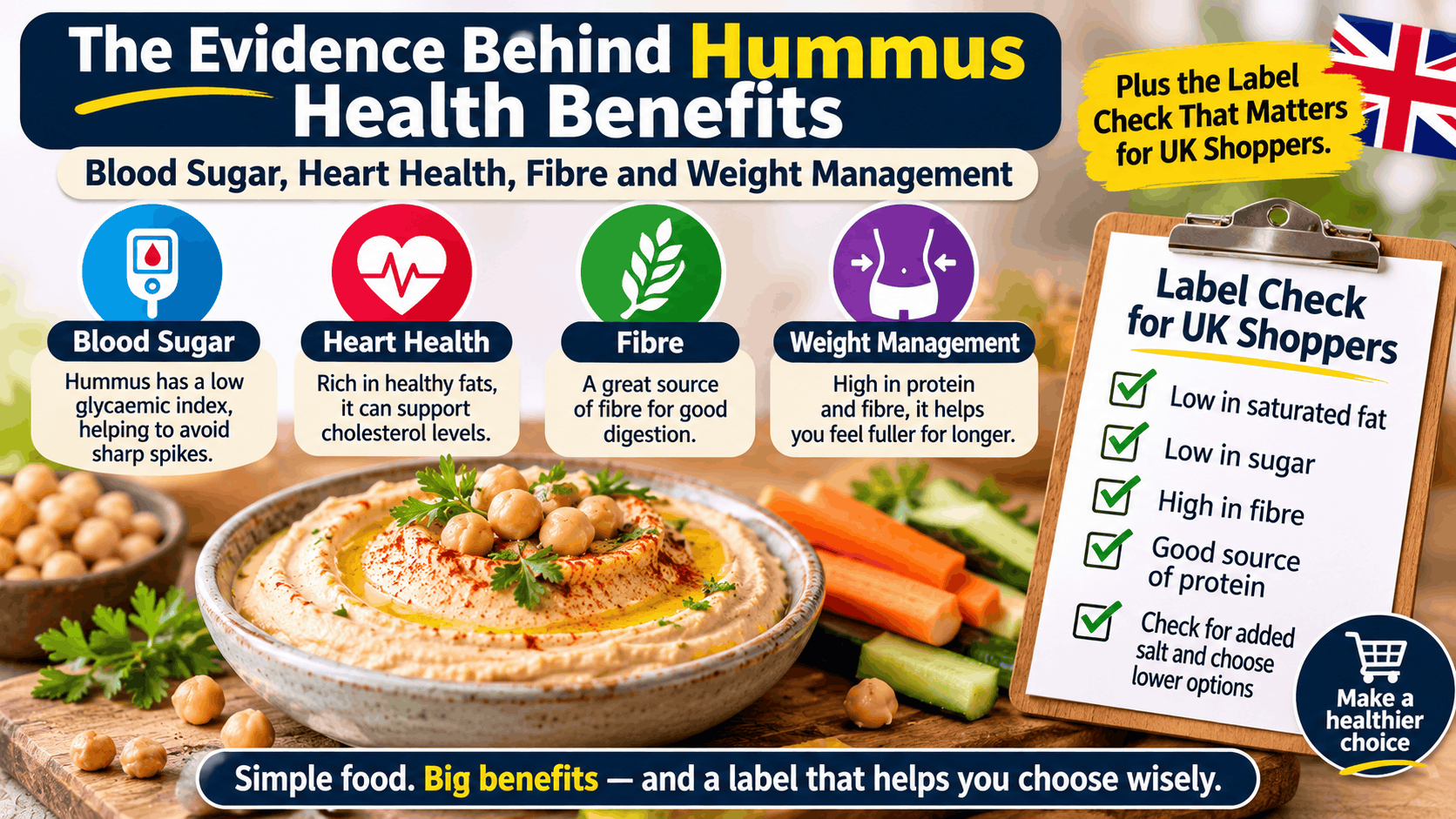
Hummus has a low glycaemic index because its ingredients are low in sugar and digested slowly . The combination of fibre and protein helps stabilise blood sugar levels, which the Cleveland Clinic notes can help maintain a healthy weight and reduce the risk of type 2 diabetes and cardiovascular disease .
A 2024 randomised crossover trial published in a peer-reviewed journal found that hummus made from intact chickpea cells produced significantly lower insulin and GIP responses than hummus made from ruptured cells . The study, involving 15 healthy participants, suggests that the physical structure of the chickpeas matters, not just the ingredients. This is a small study, but it supports the broader low-GI argument.
Heart Health
The ingredients have separate cardiovascular benefits. Chickpeas are cholesterol-free and low in sodium, and they provide polyunsaturated fats and fibre that help reduce cholesterol . Olive oil contains monounsaturated fat that may lower LDL cholesterol and blood pressure, and the American Heart Association notes that consuming at least half a tablespoon of olive oil daily may reduce heart disease risk . Sesame seeds in tahini may also lower cholesterol and reduce the risk of atherosclerosis .
BBC Good Food adds a caveat that matters for UK shoppers: some brands replace olive oil with sunflower or rapeseed oil because it is cheaper . Those oils are not unhealthy, but they do not carry the same evidence base as olive oil for cardiovascular benefit. Check the label.
Fibre and Gut Health
Chickpeas are a rich source of fibre, and the type of fibre they contain has a positive effect on gut health, promoting beneficial bacteria . A 100g portion of hummus contains around 6g fibre, according to USDA data cited in a 2016 review . That is a meaningful contribution towards the UK recommendation of 30g fibre per day for adults.
Weight Management
Including chickpeas regularly in the diet is associated with lower weight, lower BMI and a better waist circumference . Part of the reason is the starch in chickpeas: one-third is amylose, a type of resistant starch that is less digestible, so it keeps you fuller for longer . The Cleveland Clinic’s dietitian frames it simply: hummus has fibre and protein, so you digest it more slowly .
Anti-Inflammatory Properties
The classic ingredients, chickpeas, sesame seeds and olive oil, have anti-inflammatory properties. BBC Good Food cites virgin olive oil as having an anti-inflammatory action “on a par with ibuprofen” . That is a striking comparison, and it should be read as a general characterisation of olive oil’s known effects rather than a suggestion that hummus is a substitute for pain relief.
The Practical Caveats
Portion size matters. Because hummus is an added fat, eating it in large quantities adds more fat than you might realise . The Cleveland Clinic’s advice is to eat it in moderation .
Shop-bought versions vary. Check the oil. If the label lists sunflower or rapeseed oil instead of olive oil, you are getting a different nutritional profile . Some brands also add more salt or sugar than a homemade version would.
Allergies. Hummus contains sesame (tahini) and often garlic, and chickpeas are a legume. If you have an allergy to any of these, avoid it .
Food safety is a separate issue. A Norwich falafel bar was closed in July 2026 after listeria was found in hummus and other ready-to-eat foods, linked to a confirmed case of listeriosis . That was a specific premises hygiene failure, not a problem with hummus as a food. It is a reminder that ready-to-eat deli items carry risks if hygiene standards slip, not that hummus itself is unsafe.
A Quick Comparison: Hummus vs Other Spreads
| Spread (per 30g) | Calories | Fat | Fibre | Protein |
| Hummus | ~92 kcal | 8g | 1.5g | 2g |
| Butter | ~215 kcal | 24g | 0g | 0.2g |
| Mayonnaise | ~200 kcal | 22g | 0g | 0.3g |
Sources: BBC Good Food for hummus . Butter and mayonnaise figures are standard reference values and are included for comparison; they are not from the search results.
The comparison is the point. Hummus is not a low-calorie food, but it replaces spreads that are almost entirely fat with something that contributes fibre, protein and minerals. On a sandwich or with vegetables, it is the better choice.
Frequently Asked Questions
Is hummus good for your health?
Yes, in moderation. It provides fibre, plant protein, healthy fats and minerals, and the evidence supports benefits for blood sugar management, heart health and gut health . It is an added fat, so portion size matters. Check shop-bought labels for olive oil rather than cheaper substitutes.
What are the main health benefits of hummus?
The main benefits are blood sugar management (low GI, fibre and protein), heart health (chickpeas, olive oil and sesame), gut health (fibre), weight management (resistant starch and satiety) and anti-inflammatory effects from the ingredients .
Is hummus good for weight loss?
It can help. Chickpeas are associated with lower weight and BMI, and the fibre and protein in hummus make it more satisfying than other spreads . But it is calorically dense because of the tahini and oil, so portion control is essential. A tablespoon on a sandwich is reasonable; half a tub as a “snack” is not.
Is shop-bought hummus as healthy as homemade?
Not always. Some brands use sunflower or rapeseed oil instead of olive oil, and some add more salt or sugar . Homemade gives you control over the ingredients. If you buy it, check the oil on the label.