 Haris
Haris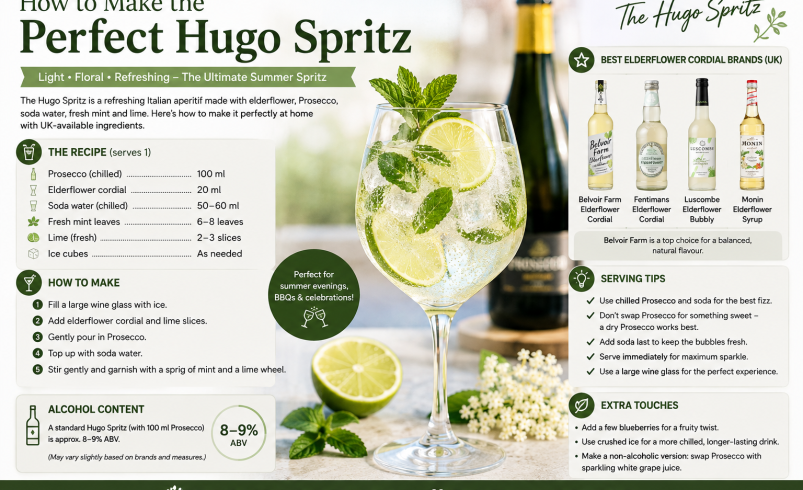
What exactly is a Hugo Spritz and can you make it properly with UK ingredients? A Hugo Spritz is a refreshing elderflower and prosecco cocktail that originated in South Tyrol but has become a staple in British bars and gardens. It combines elderflower syrup or liqueur, sparkling wine, soda water and fresh mint for a lighter alternative to the Aperol Spritz. This guide covers the authentic recipe adapted for UK shoppers, explains the difference between syrups and liqueurs, lists specific supermarket brands and provides storage advice so your garnish stays fresh. You will also find answers to common questions about alcohol content, non-alcoholic versions and food pairings that actually work.
What Is a Hugo Spritz and Why Is It Popular in the UK?
The Hugo Spritz was created in 2005 by bartender Roland Gruber in Naturns, South Tyrol, as a lighter alternative to the Aperol Spritz. Unlike its bitter orange counterpart, the Hugo relies on floral elderflower notes balanced with crisp prosecco and effervescent soda. Its lower bitterness profile appeals to UK drinkers who find traditional spritzes too medicinal or sweet.
British adoption accelerated after major supermarkets began stocking affordable elderflower products year-round. Waitrose, Tesco and Sainsbury’s now carry multiple syrup and liqueur options, removing the need for specialist Italian imports. The drink’s visual appeal also drives social media sharing, cementing its status at summer events and garden parties across England, Scotland, Wales and Northern Ireland.
Hugo Spritz vs Aperol Spritz: Key Differences
Understanding the distinction helps you choose the right drink for your palate or occasion. The Aperol Spritz uses Aperol (11% ABV), prosecco and soda in a 3-2-1 ratio, delivering pronounced bitter orange flavour with 11% ABV in the final serve. The Hugo replaces Aperol with elderflower syrup or liqueur, resulting in a sweeter, more aromatic profile with variable strength depending on your base ingredient.
Texture differs significantly between the two. Aperol creates a viscous, sunset-orange liquid that coats the glass, while the Hugo remains pale gold and effervescent due to higher soda proportion. Calorie counts also vary, with a standard Hugo containing approximately 120 to 140 calories per serving compared to 170 to 200 for an Aperol Spritz, assuming 125ml prosecco and 30ml modifier.
Authentic Hugo Spritz Recipe Using UK Ingredients
Making a proper Hugo Spritz requires precise measurements rather than free-pouring. The International Bartenders Association does not yet recognise an official spec, but the widely accepted South Tyrolean ratio is 150ml prosecco, 30ml elderflower modifier and 50ml soda water over ice. Always build directly in the glass to preserve carbonation and avoid bruising the mint through shaking.
Step-by-Step Preparation Method
Follow this sequence to achieve consistent results every time you prepare a Hugo Spritz at home.
- Fill a large wine glass or balloon goblet completely with cubed ice to maintain temperature without excessive dilution.
- Pour 30ml elderflower syrup or liqueur over the ice first to prevent splashing when adding sparkling wine.
- Add 150ml chilled prosecco slowly down the side of the glass to retain bubbles.
- Top with 50ml soda water and stir gently once with a bar spoon to integrate layers.
- Slap three to four mint sprigs against your palm to release oils before placing stem-side down in the glass.
Use only chilled ingredients straight from the fridge to minimise ice melt. Room-temperature prosecco causes rapid dilution that flattens both flavour and effervescence within minutes of serving.
Choosing Between Elderflower Syrup and Liqueur
Your choice of elderflower base fundamentally alters the drink’s character and alcohol content. Elderflower syrup contains zero alcohol and delivers pure floral sweetness, requiring no adjustment to prosecco volume. Brands like Belvoir Farm Organic Elderflower Cordial (£3.50 for 750ml at Tesco) or Bottlegreen (£2.80 for 750ml at Sainsbury’s) provide consistent quality without artificial flavours.
Elderflower liqueurs such as St-Germain (20% ABV, typically £28 to £32 for 700ml) or De Kuyper Elderflower (15% ABV, around £14 for 700ml) add boozy complexity and viscosity. When using liqueur, reduce prosecco to 125ml to maintain balance and keep total ABV near 8% to 10%. Syrups suit daytime drinking and designated drivers, while liqueurs better match evening occasions where moderate alcohol is acceptable.
Best UK Elderflower Products for Your Hugo Spritz
Supermarket availability varies seasonally, so checking stock before planning an event prevents last-minute substitutions. Premium ranges often appear during May to July when elderflowers bloom naturally, but core lines remain available year-round in larger stores and online. Prices fluctuate with promotions, so verify current costs on retailer websites before purchasing.
| Brand | Type | Typical Price | Alcohol Content | Best For |
| Belvoir Farm Organic | Syrup | £3.50 / 750ml | 0% | Clean floral taste, organic preference |
| Bottlegreen | Syrup | £2.80 / 750ml | 0% | Budget-friendly, wide availability |
| St-Germain | Liqueur | £30 / 700ml | 20% | Complex flavour, premium serves |
| De Kuyper Elderflower | Liqueur | £14 / 700ml | 15% | Value liqueur option, cocktails |
| M&S Elderflower & Mint | Syrup | £3 / 750ml | 0% | Built-in mint note, convenience |
| Aldi Specially Selected | Syrup | £2.29 / 750ml | 0% | Lowest cost, decent quality |
Store opened syrups refrigerated and consume within eight weeks to prevent fermentation or mould. Liqueurs remain stable at room temperature for years but benefit from cool, dark storage to preserve delicate floral aromatics. Always check labels for allergen information, as some products contain sulphites or trace nuts from shared production lines.
Serving Tips and Common Mistakes to Avoid
Presentation affects perception as much as flavour does in spritz-style drinks. Use a balloon goblet or oversized wine glass holding at least 500ml to accommodate ice, liquid and garnish without overflow. Narrow flutes trap aromas and limit ice capacity, causing faster warming and diluted sips.
Garnish selection requires intentionality beyond aesthetics. Fresh mint must be slapped or lightly muddled to release volatile compounds, otherwise it contributes only visual value. Lemon wheels should be expressed over the surface to deposit citrus oils before dropping into the glass. Avoid berries or edible flowers unless they complement elderflower, as competing flavours confuse the palate.
Temperature and Dilution Management
Serve immediately after preparation and discourage guests from letting drinks sit. Prosecco loses carbonation rapidly once poured, and melting ice dilutes the elderflower balance after ten to fifteen minutes. Provide coasters to prevent condensation rings but avoid insulated sleeves that hide the drink’s appealing colour gradient.
Batch preparation works poorly for Hugo Spritzes because soda water goes flat and mint oxidises in advance. Pre-mix elderflower and prosecco portions if necessary, but add soda and garnish individually upon serving. Keep backup ice, chilled glasses and fresh mint accessible to maintain quality throughout extended gatherings.
Frequently Asked Questions
Q: What is the alcohol content of a Hugo Spritz?
A standard Hugo Spritz made with elderflower syrup contains approximately 6% to 8% ABV depending on prosecco strength. Versions using elderflower liqueur range from 8% to 10% ABV. Always calculate based on your specific ingredients, as prosecco varies between 10.5% and 12% ABV across UK brands.
Q: Can I make a non-alcoholic Hugo Spritz?
Yes, substitute prosecco with non-alcoholic sparkling wine like Noughty or Thomson & Scott and use elderflower syrup instead of liqueur. The result retains the signature floral profile with less than 0.5% ABV. Ensure your sparkling alternative is genuinely alcohol-free, as some “low-alcohol” options still contain up to 1.2%.
Q: What food pairs well with a Hugo Spritz?
Light, acidic dishes complement the drink’s floral sweetness without overwhelming it. Try goat’s cheese salads, grilled prawns, lemon-drizzle cake or fresh fruit tarts. Avoid heavily spiced, creamy or red meat dishes, as these clash with elderflower’s delicacy. The Hugo works particularly well as an aperitif before light Mediterranean-style meals.
Q: How long does opened elderflower syrup last?
Refrigerated elderflower syrup typically lasts six to eight weeks after opening. Discard if you notice cloudiness, off odours or fermentation bubbles. Unopened bottles stored in cool, dark conditions remain good for 18 to 24 months. Liqueurs do not spoil but may lose aromatic intensity after two years once opened.
Q: Is Hugo Spritz gluten-free and vegan?
Most elderflower syrups and liqueurs are naturally gluten-free and vegan, but always verify individual product labels. Some producers use fining agents derived from animal products or process in facilities handling gluten. Prosecco is generally vegan-friendly, though traditional methods sometimes employ casein or isinglass. Check brand specifications if dietary restrictions apply.
Q: Can I batch-prep Hugo Spritz for a party?
Partial batching is possible but full pre-mixing is not recommended. Combine elderflower modifier and prosecco up to four hours ahead and refrigerate, then add soda water and fresh mint individually when serving. Fully mixed batches lose carbonation and develop oxidised mint flavours within thirty minutes, disappointing guests expecting freshness.
Q: What prosecco works best for Hugo Spritz?
Choose dry Prosecco DOC with minimal residual sugar to balance elderflower sweetness. UK-available options like La Marca, San Leo or Aldi’s Prosecco Spumante perform reliably without breaking budgets. Avoid extra-dry styles, as their added sugar creates cloying results when combined with syrup. Spend £8 to £12 for optimal quality-to-price ratio.