



Kittens for Sale UK: Costs, Laws & How to Avoid Scams
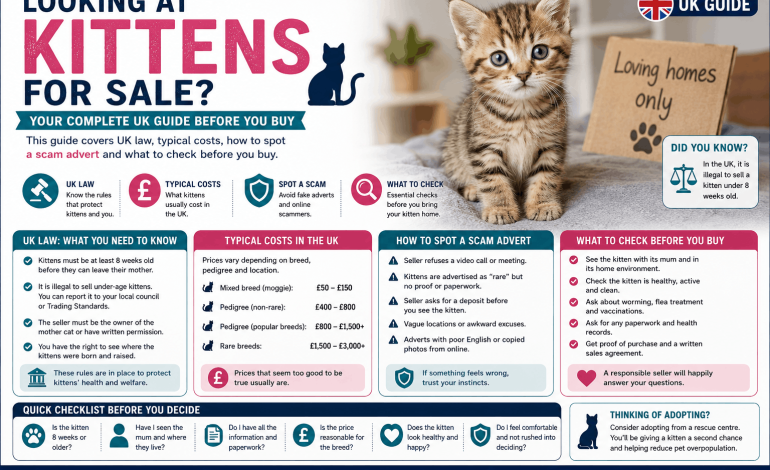

If you’re browsing kittens for sale and wondering whether an advert is trustworthy, the short answer is that UK law now limits where you can legally buy one. Since 2020, kittens for sale in England can only come directly from the person who bred them or from a rescue centre, not from a pet shop or a middleman advertising on their behalf.
This guide covers that law in plain terms, where to actually find kittens for sale, typical costs from £0 for a rescue moggy to over £1,000 for some pedigree breeds, and the specific checks that separate a genuine seller from a scam. There’s also a section on what happens legally once you’ve brought a kitten home, since the responsibilities don’t stop at the sale.
Understanding Kittens for Sale Under UK Law
Since 6 April 2020, a law commonly known as Lucy’s Law has banned the commercial third-party sale of kittens and puppies under six months old in England. In practice, this means anyone selling a kitten as a business must be the person who actually bred it, not a pet shop, an online dealer, or anyone else acting as a middleman. The rule is formally the Selling of Puppies and Kittens as Pets Act 2021, and it exists to stop irresponsible breeders from hiding behind third-party sellers.
This matters directly for anyone looking at kittens for sale online, because it means a legitimate advert should point you to the actual breeder, shown at the place the kitten was born. Anyone selling kittens commercially without the correct breeding licence risks an unlimited fine or up to six months in prison. Scotland, Wales and Northern Ireland have their own arrangements, so it’s worth checking local guidance if you’re buying outside England.
Where to Find Kittens for Sale
Two routes account for the overwhelming majority of legitimate kitten acquisitions in the UK: buying directly from a breeder, or adopting through a recognised rescue organisation.
Buying direct from a breeder
If you’re set on a specific breed, buying from the breeder who raised the litter is the only lawful commercial route under Lucy’s Law. A responsible breeder will let you see the kittens with their mother in the place they were born, provide vaccination and worming records so far, and won’t pressure you to collect a kitten before it’s ready to leave. Reputable breeders won’t let kittens go to new homes before they’re at least eight weeks old, since separating them earlier can affect their long-term wellbeing and behaviour.
Adopting from a rescue centre
Rescue organisations including Cats Protection, the RSPCA, Battersea and Blue Cross regularly have kittens available, often already vaccinated, microchipped and health-checked as part of the adoption fee. This route tends to be cheaper up front and comes with the reassurance of a charity’s own welfare standards, though kitten litters at rescues can be seasonal, with more availability during the spring and summer “kitten season.”
[Image: kitten with its mother in a home setting]
Typical Costs of Kittens for Sale
Prices for kittens for sale in the UK vary hugely depending on whether you’re looking at a rescue, a moggy from a private seller, or a pedigree breed. Adoption fees from a recognised rescue organisation typically run £50 to £200, and this usually already includes neutering, vaccination and microchipping. Non-pedigree kittens from private sellers, often described as moggies, tend to sell for £50 to £300.
Pedigree kittens cost considerably more, and prices have been rising for popular breeds. Some breeds, such as Oriental Shorthair and Exotic Shorthair, have seen average prices climb into the £600 to £700 range according to 2025 to 2026 sales data reported by Pets4Homes, and sought-after breeds like Maine Coons and Persians can top £1,000 for a well-bred kitten. These figures move with demand, so check current listings from recognised breeders or clubs before budgeting.
[Table: comparison of kitten sources showing typical cost, what’s usually included and where to find them]
| Source | Typical cost | What’s usually included |
| Rescue or charity | £50 to £200 | Vaccinations, microchip, neutering, health check |
| Private seller, moggy | £50 to £300 | Varies, always confirm what’s been done |
| Pedigree breeder | £300 to £1,000+ | Varies by breeder, check registration and health testing |
How to Spot a Scam or Untrustworthy Advert
Not every advert for kittens for sale is genuine, and the scale of the problem is bigger than most buyers expect. The Pet Advertising Advisory Group (PAAG), made up of Dogs Trust, Cats Protection, the BVA and other welfare and trade bodies, found that 19% of adverts reviewed on classified sites were flagged as potential scams, and that figure jumps sharply for pets advertised on social media, where a 2024 PAAG review found 94% of “pets for sale” posts didn’t meet its advertising standards.
A few checks catch most problem adverts before you part with any money:
- Reverse image search the photos. Scam adverts frequently reuse the same stock or stolen images across multiple listings.
- Ask to visit the kitten where it was born, with its mother present. A seller who refuses this, or offers to deliver the kitten instead, is a serious warning sign.
- Check the advert includes standard details. PAAG’s advertising standards ask sellers to list the kitten’s age, breed status and, if licensed, their local authority licence number.
- Be wary of prices well below market rate. An unusually cheap pedigree kitten is more likely to be a scam listing or an unhealthy animal than a genuine bargain.
- Never pay a deposit for a kitten you haven’t seen in person, since this is one of the most common patterns reported in pet-buying scams.
Sites including Gumtree, Pets4Homes, Preloved and Petify have signed up to PAAG’s advertising standards, which is one reason welfare groups recommend using these platforms over unmoderated social media marketplaces.
What to Check Before You Buy
Beyond spotting outright scams, a few practical checks protect you even when dealing with a genuine seller. Ask to see the kitten interacting naturally with its littermates and mother, since a kitten that seems withdrawn or unusually timid may have had limited early socialisation. Request any veterinary or vaccination records the breeder already holds, and ask directly whether the kitten has been wormed and treated for fleas.
If you’re buying a pedigree kitten, ask whether the parents have undergone any breed-specific health screening, since conditions like polycystic kidney disease in Persians or hypertrophic cardiomyopathy in Maine Coons are more common in certain lines. A breeder who can’t or won’t answer basic health questions is one to walk away from, regardless of how appealing the kitten looks in photos.
The Legal Requirements After You Bring a Kitten Home
Buying the kitten isn’t the end of your legal obligations. Since 10 June 2024, it’s been a legal requirement in England for all pet cats over 20 weeks old to be microchipped, under the Microchipping of Cats and Dogs (England) Regulations 2023. If your cat isn’t chipped, you’ll have 21 days to get it done once identified, or you risk a fine of up to £500.
Microchipping itself typically costs £10 to £30 if you’re arranging it separately, though many rescue kittens already come chipped as part of the adoption process. It’s a one-off procedure done by a vet or a trained professional, and it makes a real difference to reuniting lost or stolen cats with their owners.
Ongoing Costs After Purchase
The purchase price is only the start of what owning a kitten costs. Kittens typically need their first vaccinations at 8 to 9 weeks old, with a second dose around three to four weeks later, plus regular worming roughly every two to three weeks until 12 weeks old, then monthly until six months. Vets commonly recommend neutering from around four months, depending on the individual cat’s size and development.
Looking at the bigger picture, the PDSA estimates the minimum lifetime cost of owning a cat at £11,400 to £13,600, factoring in food, insurance, vet care and other ongoing needs across an average feline lifespan of 11 to 14 years. That works out to roughly £1,000 to £1,500 a year for most owners, a figure worth budgeting for well before you bring a kitten home.
FAQ
Q: Is it legal to buy kittens from a pet shop in the UK? No, not in England. Since Lucy’s Law came into force in April 2020, kittens can only be sold commercially by the person who bred them, so a pet shop selling kittens on behalf of a breeder is operating illegally.
Q: How much do kittens for sale cost in the UK? It depends on the source. Rescue adoption fees typically run £50 to £200, non-pedigree kittens from private sellers usually cost £50 to £300, and pedigree kittens commonly range from £300 to over £1,000 depending on breed and demand.
Q: What age can kittens leave their mother? Most vets and welfare organisations, including Cats Protection, recommend kittens stay with their mother until at least 8 to 9 weeks old. Leaving earlier can affect a kitten’s long-term wellbeing and behaviour, since this is when they build immunity and learn social skills.
Q: How do I know if a kitten advert is a scam? Warning signs include reused or stolen photos, refusal to let you visit the kitten with its mother, unusually low prices for the breed, and requests for a deposit before you’ve seen the kitten in person. Checking listings on sites signed up to PAAG’s advertising standards reduces the risk considerably.
Q: Do I have to microchip my kitten? Yes, in England it’s been a legal requirement since 10 June 2024 for all pet cats over 20 weeks old to be microchipped, with fines of up to £500 for non-compliance. Microchipping typically costs £10 to £30 if not already included with adoption.
Q: Is it cheaper to adopt a kitten than buy one? Usually, yes. Rescue adoption fees of £50 to £200 typically already include vaccination, microchipping and neutering, which would otherwise cost extra if bought separately from a private seller or breeder.
Q: What questions should I ask a kitten breeder? Ask to see the kitten with its mother at the place it was born, request any vaccination or worming records, and ask about health screening for the parents if buying a pedigree breed. A breeder unwilling to answer these questions or let you visit in person is a red flag.