easyJet Flight U24429 Emergency: What We Actually Know
- August 18, 2026
- 0
The easyjet flight u24429 emergency involved an Airbus A320 that turned back to Lyon shortly after departing for Porto on 22 August 2025, after the crew declared a
The easyjet flight u24429 emergency involved an Airbus A320 that turned back to Lyon shortly after departing for Porto on 22 August 2025, after the crew declared a
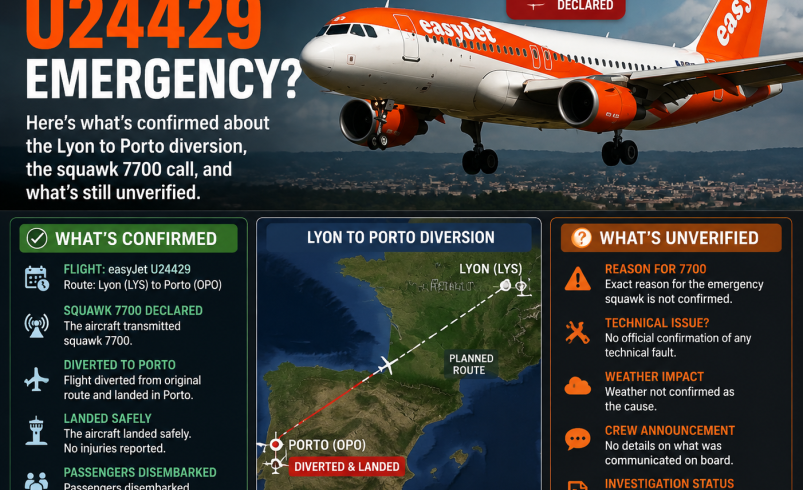
The easyjet flight u24429 emergency involved an Airbus A320 that turned back to Lyon shortly after departing for Porto on 22 August 2025, after the crew declared a general emergency and squawked 7700. This piece sets out exactly what’s confirmed about the incident, what’s still unverified despite appearing across several aviation blogs, and what the flight tells you about how airlines and UK law handle disruptive passengers in the air.
A word of caution before we go further: the incident involved a passenger apparently going through a medical or psychological crisis. Several sites covering this story have stated a specific diagnosis for that person as fact. No official investigation report confirming that detail has been published, so this article treats it as unconfirmed rather than repeating it as established fact.
easyJet flight U24429, operated by easyJet Europe on an Airbus A320 (registration OE-IJL), departed Lyon Saint-Exupéry Airport at 18:34 CEST on 22 August 2025, bound for Porto. The aircraft left the ground roughly an hour behind schedule, which was unremarkable in itself.
The climb stopped at 20,000 feet, at which point the crew declared an emergency and squawked 7700, the universal transponder code for a general emergency. Flight tracking data shows the aircraft turned around and landed back at Lyon on runway 35R around 45 minutes after departure, before taxiing to a remote stand rather than a normal gate.
A squawk 7700 call doesn’t automatically mean the aircraft itself was in danger. Pilots use it for a wide range of situations, including medical emergencies, security concerns, fuel problems and technical faults, because it tells air traffic control to treat the flight as a priority regardless of the cause.
In this case, aviation trackers and subsequent reporting point to a passenger-related disruption rather than a technical fault with the aircraft. Cabin crew reportedly identified a passenger in distress who then attempted to move toward the cockpit area, which airlines and regulators treat as a serious security concern regardless of intent. That’s a standard reason for crews to stop the climb and prioritise a return to the nearest suitable airport.
Several aviation content sites have since published detailed accounts naming the passenger’s age, nationality and a specific psychiatric diagnosis. These details don’t trace back to an official French investigation, easyJet statement or airport authority release. Until an authoritative source confirms them, treat the specifics of the passenger’s condition as unverified, and be cautious of any site presenting them as settled fact.
What is consistently reported and more reliably sourced: the aircraft landed safely, no injuries were reported among passengers or crew, and the flight was met on the ground by French authorities, which is standard procedure whenever a squawk 7700 call involves a passenger security concern.
Once a crew identifies a genuine in-cabin security or medical concern, continuing to the original destination is rarely the safer option. Returning to the departure airport gives the crew a known runway, known emergency services response times and, if needed, immediate access to police already familiar with the airport’s procedures.
Diverting also cuts the time a distressed or disruptive passenger remains airborne, which matters if the crew are managing a situation that could escalate. Airlines and pilots are trained to weigh the extra delay of a return against the risk of continuing, and a return is the more common outcome once cockpit security is a factor.
easyJet Europe operates under Austrian and EU regulation for this particular flight, since it departed from France, but the general framework for handling disruptive passengers is similar across UK and EU carriers. It’s worth understanding, since easyJet also flies the same routes and aircraft type from UK airports.
The UK’s Civil Aviation Authority treats disruptive behaviour on an aircraft as a criminal matter, not just a customer service issue. Under UK law, drunkenness on an aircraft carries a maximum fine of £5,000 and up to two years in prison, while endangering the safety of an aircraft carries a maximum sentence of five years. Passengers responsible for a diversion can also be billed for the cost of it, which the CAA puts at typically £10,000 to £80,000 depending on the aircraft and where it diverts to.
Where a passenger’s disruptive behaviour stems from a medical or psychiatric crisis rather than deliberate misconduct, airlines and courts generally treat it differently to drunkenness or wilful air rage, though the immediate safety response from the crew looks the same either way. That distinction matters for how the case is handled afterwards, even though it doesn’t change what happens in the cabin at the time.
Flight number U24429 is a route designation, not a specific aircraft, so easyJet continues to operate flights under that number on the Lyon to Porto route on its normal schedule. The 22 August 2025 incident affected a single rotation of that flight number and hasn’t led to any reported change to the route itself.
If you’re booked on a flight with this number and searched for this incident out of concern, there’s no indication the route or aircraft type has an ongoing safety issue tied to it. The emergency was a passenger-related event, not a fault with the aircraft or the route.
Q: What happened on easyJet flight U24429?
The Airbus A320 departed Lyon for Porto on 22 August 2025, stopped its climb at 20,000 feet, and the crew declared an emergency, squawking 7700. The aircraft turned back and landed safely at Lyon around 45 minutes after departure. Reports point to a passenger-related security and medical concern rather than a technical fault, though full official details haven’t been published.
Q: What does squawk 7700 mean?
Squawk 7700 is the transponder code pilots use to signal a general emergency to air traffic control, covering medical, security, technical and fuel-related situations. It tells controllers to treat the aircraft as a priority and clear its path. It doesn’t by itself tell you what caused the emergency, which is why the specific cause is usually confirmed separately by the airline or investigators.
Q: Was anyone hurt on flight U24429?
No injuries to passengers or crew have been reported in connection with this incident. The aircraft landed without incident and was met on the ground by French authorities, which is standard procedure for this type of emergency call rather than a sign that anyone was harmed.
Q: Why did the aircraft return to Lyon instead of continuing to Porto?
Returning to the departure airport gives the crew a familiar runway and quicker access to emergency services and police than continuing to an unfamiliar destination. Once cabin crew identified a security concern around cockpit access, prioritising the fastest safe landing took precedence over completing the original route.
Q: Is it true the passenger had a specific mental health diagnosis?
This detail appears on several aviation content sites but hasn’t been confirmed by an official investigation, easyJet or French authorities. Until a primary source verifies it, it should be treated as unconfirmed rather than fact, and readers should be cautious of sites presenting it otherwise.
Q: Can a passenger be prosecuted for causing a flight to divert?
Yes, if the behaviour meets the threshold for a criminal offence. Under UK law, disruptive behaviour that endangers an aircraft carries a maximum five-year prison sentence, while lesser offences like drunkenness carry up to two years and a £5,000 fine. Passengers can also be billed for the diversion cost, which the CAA estimates at £10,000 to £80,000.
Q: Is easyJet flight U24429 safe to book now?
Yes. The flight number refers to a scheduled route, not the specific aircraft or crew involved in the August 2025 incident, and easyJet has continued operating it on the normal Lyon to Porto schedule. There’s no reported ongoing safety concern tied to the route itself.